Get Full Government Meeting Transcripts, Videos, & Alerts Forever!
Get email alerts on the Zoning Amendment topic
No spam. Unsubscribe anytime.
Commission backs Western SoMa code fixes to protect schools and nightlife, correct typo
Summary
The Planning Commission unanimously recommended modifications to Western SoMa zoning to exempt elementary/secondary schools from the 25,000‑sq‑ft nonresidential cap and to correct a typographical error so certain nighttime entertainment uses are principally permitted; supervisors and community advocates urged the changes.
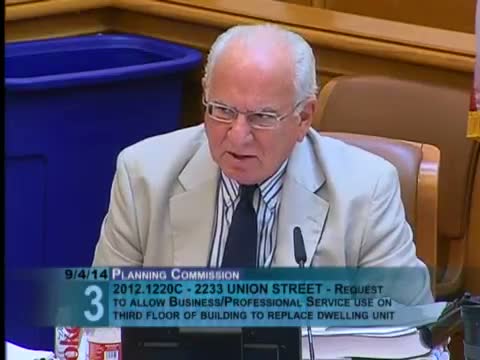
The Planning Commission on Sept. 4 voted unanimously to recommend that the Board of Supervisors adopt narrow amendments to the Western SoMa zoning controls that would both allow community‑serving schools and preserve longstanding nightlife uses.
Planning staff asked the Commission to correct what it described as a typographical error in the Western SoMa Special Use District that currently reads as if nighttime entertainment reopening would require conditional‑use authorization. Staff said the intent of the Western SoMa plan adopted in 2013 was to make qualifying nighttime entertainment principally permitted in certain mixed‑use corridors, and asked the Commission to make that correction. Staff also recommended limiting the proposed removal of the 25,000‑square‑foot use size prohibition to elementary and secondary schools rather than all nonresidential uses.
Supervisor David Campos and others—including nightlife operators and Presidio Knoll School representatives—addressed the Commission in support, saying the changes are narrowly tailored to allow culturally important venues (for example a proposed T SHAC nightclub) and to permit a Mandarin‑immersion PreK–8 school to expand. The Commission accepted staff’s modifications and voted 7–0 to forward a recommendation for approval with those changes.
Why it mattered: The amendments aim to reconcile the Western SoMa Plan’s community intent—balancing growing residential demand with preservation of cultural nightlife and needed community services—by clarifying code language and selectively exempting schools from size caps.
What’s next: The Commission recommended approval to the Board of Supervisors; the supervisors’ offices of Kim, Wiener and Campos were present and supportive. If adopted by the Board, the code corrections will simplify permitting for qualifying nighttime entertainment and allow conditional use consideration for limited institutional exceptions as recommended by staff.