Get Full Government Meeting Transcripts, Videos, & Alerts Forever!
Get email alerts on the Wireless Siting topic
No spam. Unsubscribe anytime.
Planning Commission approves rooftop wireless facility at 431 Balboa after debate over RF emissions
Summary
The Planning Commission approved AT&T Mobility's conditional use permit for up to nine rooftop panel antennas at 431 Balboa Street to close a demonstrated coverage gap. Neighbors testified about health and visual impacts; department staff and the city's public health review found the proposal complies with FCC exposure standards and technical tests showing a coverage gap.
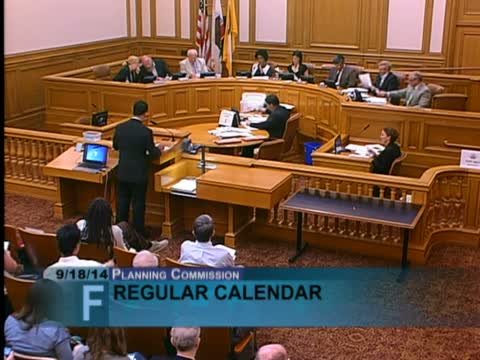
The San Francisco Planning Commission approved a conditional use authorization on Sept. 18 for AT&T Mobility to install up to nine screened, rooftop antennas at 431 Balboa Street, a proposal the company says will fill a documented coverage and capacity gap for 3G and LTE services in the surrounding neighborhood.
Planning staff introduced the application and noted that the project site is zoned neighborhood commercial small-scale and that the proposal includes parapet and screening elements designed to minimize visual impacts. AT&T's presentation said the carrier evaluated 57 alternate locations in the search ring and selected 431 Balboa after independent analysis by Hammett & Edison confirmed a coverage gap the company could close from that rooftop. "We evaluated alternatives and selected the least intrusive means to close the coverage gap," AT&T's Teddi Verhais said in the commission chamber.
Neighbors told the commission they feared radio-frequency emissions and the visual effect of antennas placed less than 50 feet from some homes. "I live about 50 feet away — every morning when I wake up I will see these towers in my view," said John Umekubo, who brought a petition signed by dozens of neighbors objecting to the project. Several other residents asked that the city's Department of Public Health (DPH) perform independent post-installation measurements.
AT&T and the Planning Department noted that the DPH reviewed a licensed RF engineer's analysis and concluded the proposed facility would operate well below applicable FCC public-exposure limits. Bill Hammett, the carrier's independent radio-frequency engineer, answered commissioners' technical questions about how coverage gaps manifest (dropped calls, slow downloads, inability to connect) and how a location with "five bars" of signal strength can still lack usable capacity when many users compete for service.
Commissioners pressed staff and the carrier on monitoring and enforcement. Staff described the city's post-construction monitoring windows (an immediate 10-day check and periodic rechecks), and AT&T said it will offer to fund DPH spot measurements for concerned residents and can return to the commission with additional mitigation if monitoring shows levels inconsistent with projections.
After discussion of design and enforceability measures, Commissioner Antonini moved to approve the permit with conditions described by staff. The commission voted unanimously to approve the application.
What happens next: the carrier will file for the building and electrical permits and the city will perform post-installation RF monitoring per its standard process. Residents retain the right to request spot measurements from DPH if concerns arise.