Get Full Government Meeting Transcripts, Videos, & Alerts Forever!
Get email alerts on the Entertainment Permit topic
No spam. Unsubscribe anytime.
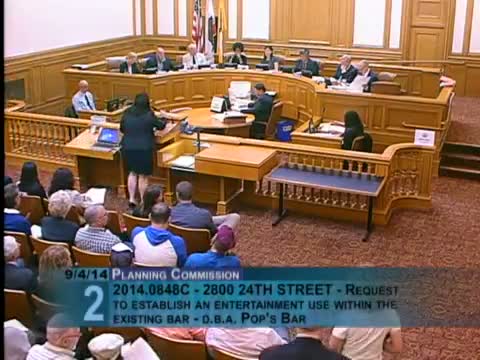
Planning commission approves Pops Bar amplified-music permit with door‑soundproofing, six‑month review
Summary
The Planning Commission unanimously approved a conditional use authorization allowing Pops Bar to play amplified music late‑night with conditions including a soundproofing mechanism at the door (minimum drapery), a six‑month follow‑up report and neighborhood coordination. The motion passed 7–0.
The San Francisco Planning Commission on Sept. 4 approved a conditional use authorization that lets Pops Bar expand its entertainment permit to include amplified music during extended weekend hours, with several neighborhood‑safety conditions.
Planning Department staff recommended the change for the long‑established, 1,300‑square‑foot bar at 2820 Fourth Street, citing 19 letters of support and no formal opposition. During the public hearing, project sponsor Michael Krause said the bar already holds a limited live‑performance permit and outlined measures to limit impacts: a professional sound system with a limiter, soundproofing, doormen with a dedicated neighbor phone line and written outreach to nearby addresses in English and Spanish.
Commissioner Dennis Richards moved approval with three conditions: a soundproofing mechanism around the front door (minimum drapery), a six‑month “look‑back” report to the Planning Commission on disturbances and compliance, and a requirement that the operator continue working with the neighborhood to address late‑night issues. The maker and seconder agreed to preserve earlier staff recommendations about limiting live amplified music past 10 p.m.; DJs would be permitted later under the entertainment permit as amended. A roll‑call vote recorded seven ayes; the measure passed unanimously.
Why it mattered: Commissioners said the conditions balance the neighborhood’s quality‑of‑life concerns with the goal of preserving small, locally owned entertainment venues. The six‑month report will give the Commission a chance to evaluate whether the new hours or operations generate complaints that require further action.
What’s next: The permit was approved as conditioned. The Commission’s action requires the operator to comply with the stated sound‑control measures and report back; enforcement of any violations would proceed under existing city codes and the entertainment permit process.