Get Full Government Meeting Transcripts, Videos, & Alerts Forever!
Get email alerts on the Presidio Hill School topic
No spam. Unsubscribe anytime.
Planning Commission approves Presidio Hill School expansion with negotiated neighborhood conditions
Summary
The commission approved a conditional use authorization allowing Presidio Hill School to incorporate 233 Maple Street into its campus and raise enrollment to 230 students, subject to staff‑recommended and neighborhood‑negotiated conditions; the commission voted unanimously to approve.
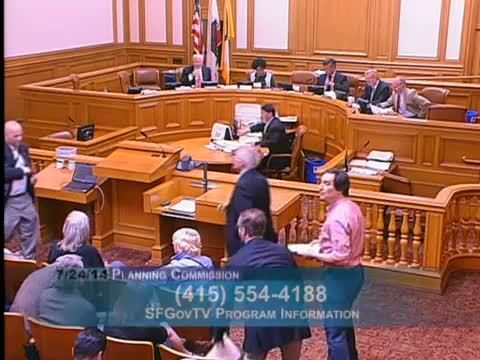
The Planning Commission on July 24 approved a conditional use authorization for Presidio Hill School to expand into an adjacent residential lot at 233 Maple Street and raise its enrollment cap from 200 to 230 students, following months of neighborhood negotiations led by Supervisor Mark Farrell.
Mary Woods of Planning Department staff said the school and neighborhood reached agreement on a package of conditions; staff recommended approval with eight additional conditions to be incorporated into the draft motion. Supervisor Mark Farrell commended the extended negotiations between the school and neighbors and said the result reflects a compromise that avoided contentious litigation.
Ethan Weiss, chair of the Presidio Hill School board, thanked the neighbors and the supervisor for negotiating agreements on operational conditions. Weiss specifically requested that the commission allow the existing commercial white zone not to be extended; staff noted the Department of Parking and Traffic (MTA) has jurisdiction over white zones but the private agreement between school and neighbors may address the issue.
Why it matters: The approval expands the school's capacity while the conditions aim to address pick‑up/drop‑off, traffic management and neighborhood quality‑of‑life concerns. Staff and commissioners stressed the conditions are intended to safeguard local streets and minimize impacts on adjacent residential properties.
Vote and outcome: The motion to approve the conditional use authorization with the additional eight conditions passed by roll call (recorded unanimous approval in the hearing). The commission noted the private agreement over the white zone remains a neighborhood matter enforceable outside the CU.
Next steps: Staff will incorporate the negotiated and standard conditions into the final draft motion; the school will implement the measures and coordinate with MTA for any loading/parking changes.
Representative quote: "This is a product of a lot of hard work over the course of the months," Supervisor Mark Farrell said, praising neighborhood negotiations that led to the agreement.