Get Full Government Meeting Transcripts, Videos, & Alerts Forever!
Get email alerts on the Parks Open Space topic
No spam. Unsubscribe anytime.
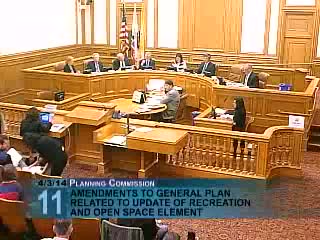
Planning Commission adopts Recreation and Open Space Element after fraught debate over biodiversity policy
Summary
The commission voted to adopt amendments updating the city's Recreation and Open Space Element (ROSE). Public comment split sharply over Policy 4.2 on biodiversity and natural areas; staff and supporters urged adoption while opponents warned it could lead to tree removal and private-land management changes.
The San Francisco Planning Commission on April 3 adopted amendments to the city's Recreation and Open Space Element (ROSE), a multi-year update staff described as the product of seven years of community outreach. Commissioners and the public focused intense attention on Policy 4.2, which addresses biodiversity and inventorying potential natural areas.
Planning staff lead Sue Exley said the update includes new historic-preservation policies, a sustainability policy, and a new mapping approach to identify "high needs" areas using 2010 Census data and layers for children, seniors and low-income residents. Exley said staff refined data sources after public comment, clarified the role of partnerships and maintenance funding, and limited the intended scope of natural-area identification to a narrow set of criteria (such as undeveloped, relatively undisturbed sites and adjacent resource areas).
Public comment produced a sharp divide. Robin Scherer told the commission, "This Rose stinks," warning the plan could threaten mature trees and allow government takeover of private spaces. Speakers including Rupa Bose and Sally Stevens argued Policy 4.2 could be used to remove nonnative trees and expand the city's natural-areas program onto private land. Rupa Bose said the language "sounds very much as though it will be a takeover" and warned of pesticides and restricted access used in some natural-areas management.
Other speakers urged adoption. Christie Wong of SPUR, Trust for Public Land representatives, the San Francisco Parks Alliance, neighborhood volunteers and recreation advocates described the plan as balanced, the result of extensive outreach, and essential to protecting parks and open spaces. Sarah Ballard of the Recreation and Park Department expressed departmental support and thanked staff for collaboration.
Commissioners debated the document's legal and practical implications, particularly implementation of Policy 4.2 and whether it could shift management authority or create unintended land-use consequences. Several commissioners asked the staff to clarify that the policy's scope is narrow and that the ROSE is a guiding document rather than an immediate land-use mandate.
Despite concerns and calls for follow-up on specific items, the commission adopted the ROSE amendments. Commissioners recorded differing views during the vote and discussed a minor textual correction (changing "historical" to "historic"); Deputy City Attorney Marlena Byrne advised on commissioner participation when a commissioner briefly watched the hearing by monitor. The motion to adopt carried at the hearing.
Next steps: staff will continue implementation work, prepare schedules for complementary efforts (such as a citywide historic-resources survey and design guidelines), and coordinate with other departments on any program-level actions that grow from Policy 4.2.