Get Full Government Meeting Transcripts, Videos, & Alerts Forever!
Get email alerts on the Land Use topic
No spam. Unsubscribe anytime.
Planning commission approves Valley Tavern patio with noise‑mitigation conditions
Summary
After competing testimony from neighbors and many patrons, the Planning Commission approved the Valley Tavern’s request to legalize its rear patio as an outdoor activity area, adopting a package of noise‑mitigation conditions including a 8 p.m. closing for the patio, a six‑month noise‑monitoring program and physical sound‑reductions.
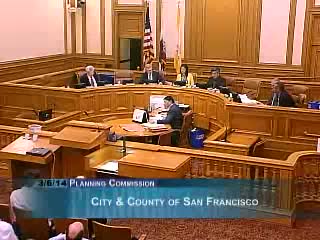
The Planning Commission voted March 6 to grant conditional use authorization for the Valley Tavern’s rear patio in Noe Valley, subject to a set of additional conditions negotiated between the owner, staff and neighboring residents.
Planning staff described the patio as an existing, roughly 1,100‑square‑foot outdoor area that had operated intermittently for decades and was the subject of an August 2012 violation. Staff and the project sponsor circulated a set of augmented conditions, and staff told the commission the owner had agreed to them. Key measures included an acoustic fence, application of sound‑absorbing material to the bar side of retaining walls, additional signage for patrons, a six‑month noise‑monitoring program with results submitted to the zoning administrator, installation of an automatic rear door to limit sound escape, and a reduction of outdoor hours from 10 p.m. to 8 p.m., with a one‑hour clearing period.
"Legalization of the outdoor space will require the removal of some of the illegal construction within the rear yard," Planning staff advised, and staff recommended adoption of the additional conditions. The owner, Vince Hogan, and his representative emphasized long neighborhood ties and agreements reached with abutting residents. Neighbors immediately adjacent to the rear yard described recurring loud, erratic noise incidents that disrupted sleep and family life and asked the commission to deny the application unless conditions were strictly enforceable.
After hearing multiple residents both for and against the project, commissioners discussed enforceability of conditions, the limits of imposing requirements on adjacent private walls, and accessibility. The commission adopted the package of staff‑recommended conditions, struck one condition that would have required acoustical treatment on an adjacent property (but encouraged the owner to pursue that treatment by agreement), and approved the conditional use. The motion passed unanimously.
Staff said the zoning administrator will monitor compliance and can revoke approval for violations of conditions. The owner is expected to implement the sound‑mitigation measures and begin the monitoring program as required by the conditions.