Get Full Government Meeting Transcripts, Videos, & Alerts Forever!
Get email alerts on the Transit Effectiveness Project topic
No spam. Unsubscribe anytime.
Planning Commission certifies final EIR for Transit Effectiveness Project over objections
Summary
After hours of public comment, the San Francisco Planning Commission certified the final environmental impact report for the SFMTA's Transit Effectiveness Project on a 6–1 vote, finding the document adequate under CEQA though several neighborhood speakers urged recirculation and more project-level detail.
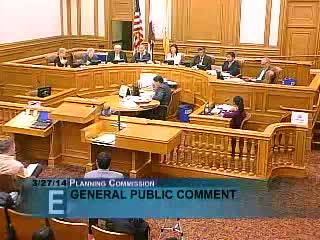
The San Francisco Planning Commission voted 6–1 on March 27 to certify the final environmental impact report (EIR) for the Transit Effectiveness Project, the San Francisco Municipal Transportation Agency’s (SFMTA) program to speed and prioritize transit citywide.
Deborah Dwyer, the Planning Department’s environmental review coordinator, told the commission the hearing was limited to whether the final EIR complied with the California Environmental Quality Act. “This is not a hearing to consider approval or disapproval of the TEP,” she said, urging the body to focus on the adequacy, accuracy and objectivity of the environmental analysis.
The presentation summarized that the EIR examined program- and project-level changes — from boarding islands and transit bulbs to transit-only lanes — and analyzed two alternatives described as moderate and expanded. Dwyer said recent errata and supplemental memos did not identify new significant impacts that would trigger recirculation under CEQA.
But dozens of members of the public told the commission they felt the final EIR did not match the project the SFMTA planned to implement. David Pilpel and other speakers argued that project-level decisions and route changes developed after the draft EIR created substantive differences that should have been recirculated for public review. “There’s an increasing divergence in what the EIR analyzed and what the MTA is now planning or proposing to approve or implement,” Pilpel said during public comment, urging commissioners to withhold certification.
MTA staff described extensive outreach and explained that many features were analyzed at program level while some corridors and eleven TTRP (transit travel time reduction proposal) items were analyzed at the project level where design had advanced. Julie Kirschbaum, SFMTA operations planning manager, said the agency conducted more than 100 community meetings during the planning phase and additional neighborhood workshops as the service and capital proposals matured.
Commissioners deliberated on whether the EIR’s program/project balance and the department’s supplementary materials satisfied CEQA’s requirements. Commissioner Antonini voted no, saying he remained concerned about the gap between the analysis and the project as now described. The majority concluded the final EIR adequately documented the analysis and responded to comments.
The MTA board, which will decide whether to adopt the TEP elements, was scheduled to consider the merits of the proposals at a separate hearing the following day.