Get Full Government Meeting Transcripts, Videos, & Alerts Forever!
Get email alerts on the Public Sites topic
No spam. Unsubscribe anytime.
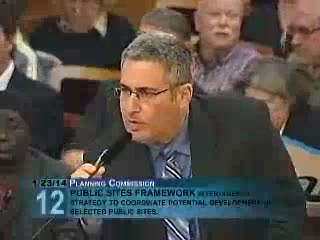
Planning Commission hears city plan to use public land to help reach Mayor Lee’s 30,000‑unit housing goal
Summary
City planning and economic development staff previewed a Public Sites Development Framework that would use MTA and PUC land to help deliver housing — including middle‑income and affordable units — toward the mayor’s goal of 30,000 new or rehabilitated units by 2020. Commissioners and residents pressed for site‑by‑site analysis, community outreach and clarity on how much affordable housing will be produced.
Planning Department staff and the Mayor’s Office of Economic and Workforce Development on Thursday introduced a new Public Sites Development Framework designed to coordinate the use of underutilized public land for housing, jobs and public benefits.
Ken Riggs of the Office of Economic and Workforce Development told the Planning Commission that the mayor has directed officials “to set our sights on developing 30,000 new or rehabilitated units by the year 2020,” with an emphasis that 30 percent of them be affordable and that a large share be within reach of middle‑income households. Claudia Flores, Planning Department staff, said the framework will build a menu of public benefits, tools and pilot strategies and that site lists will be identified only after neighborhood outreach and feasibility work.
The program will start with enterprise agency sites — primarily locations controlled by the Municipal Transportation Agency (MTA) and the Public Utilities Commission (PUC) — because those agencies own sizable portfolios and already report properties under the city’s surplus property process. Staff said the framework will pair site‑level planning with an effort to create tools that can subsidize housing without solely relying on discounted land sales.
Commissioners and public commenters pressed staff to explain how the initiative will avoid past problems. Commissioner Sugaya asked whether there are sites that are categorically off the table; Planning staff said parks and Recreation and Park Department land would not be considered for building without ballot approval and that some agency sites are not yet ready for development. Several residents from Bayview/Hunters Point urged the commission to consider past redevelopment failures, displacement, and health and environmental concerns before advancing specific projects.
Staff outlined next steps: refining the program scope over the coming weeks, initiating technical stakeholder focus discussions, beginning community meetings for first‑tier sites by March, and returning to the commission with an update and possible site proposals in April. The department emphasized that individual projects will be subject to project‑level environmental and public hearings and that fiscal feasibility analyses would go to the Board of Supervisors where required.
The commission did not take any action on a policy change Thursday; staff asked for early feedback on the framework and the timing for site‑specific outreach.