Get Full Government Meeting Transcripts, Videos, & Alerts Forever!
Get email alerts on the Land Use topic
No spam. Unsubscribe anytime.
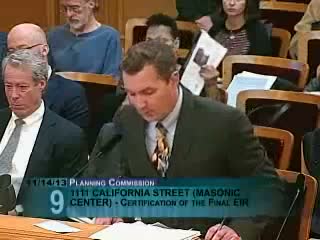
Planning Commission certifies EIR for Nob Hill Masonic Center and approves conditional‑use authorization
Summary
The Planning Commission certified the final EIR for the proposed renovation of the Nob Hill Masonic Center at 1111 California Street and approved a conditional‑use authorization that allows a modest intensification of events and five permanent food/beverage stations, subject to 50 conditions and neighborhood settlement terms.
The San Francisco Planning Commission on Nov. 14 certified the Final Environmental Impact Report for the proposed renovation of the Nob Hill Masonic Center at 1111 California Street and approved a conditional‑use authorization to formalize the venue’s continued assembly and entertainment uses.
Brett Bollinger of the Planning Department’s environmental planning section told commissioners the EIR analysis concluded that implementation of the project “will not result in any project‑specific significant unavoidable environmental impacts” and that the final document and responses to comments comply with CEQA and city procedures. The EIR focused on the incremental change, or “delta,” in intensity from the Masonic’s existing operations, staff said.
The project would remove some main‑floor seating to provide flexible configurations, upgrade the catering kitchen to commercial standards, install new sound and lighting systems, and add five permanent accessory food and beverage stations. Staff said no alcohol service to the general public would be allowed: alcohol would be served only to patrons at ticketed events.
Attorney Steve Vettel, representing the California Masonic Memorial Temple and Live Nation (the operator), said the project preserves the building’s historic use while imposing neighborhood protections incorporated both in the draft conditions and in a settlement with community groups. The settlement limits large live entertainment events to a maximum of 79 per year (54 music concerts) and reduces concession stands from eight in an earlier 2010 approval to five under the settlement terms.
Speakers for labor and neighborhood groups also addressed the commission. Joanne Desmond of IATSE Local 16 described local stagehand jobs supported by events at the Masonic. Captain Garrett Tom of Central Station summarized the Police Department’s review and said there were minimal calls for service related to the venue over recent years. Greg Gallenoz of the Nob Hill Coalition said neighbors negotiated a monitoring committee, preservation fund and an early‑access ticket program for adjacent residents.
Commission debate centered on whether converting event‑by‑event ABC permits to a more permanent liquor authorization constituted an intensification of use. Commissioner Moore said he viewed a permanent liquor license as an intensification and registered concern; staff and other commissioners said the EIR analyzes the increase in intensity from the existing operation baseline. Sarah Jones, the Environmental Review Officer, reiterated that the 2012 conditional use sought to memorialize historic conditions and that the EIR examines the limited increase proposed now.
Commissioner Antonini moved to certify the Final EIR; the motion passed 4–1 with Commissioner Moore dissenting. Following the certification, commissioners considered the conditional‑use authorization with the agreed conditions and settlement provisions; the commission approved the conditional use by unanimous vote (recorded in the public minutes), with the operational and mitigation conditions read into the record.
The approvals allow the Masonic to continue as a regional cultural and entertainment venue with specific limits on event counts, concessions, hours, noise attenuation, security and parking/loading measures intended to protect neighborhood welfare. Project implementation will follow the conditions approved by the commission and any additional permits required from other agencies.