Get Full Government Meeting Transcripts, Videos, & Alerts Forever!
Get email alerts on the Wireless Facility Aesthetics topic
No spam. Unsubscribe anytime.
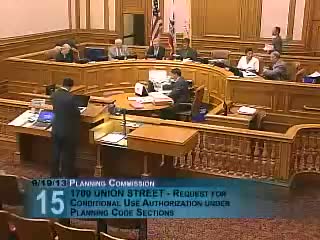
Commission continues AT&T wireless proposal at 1700 Union after neighbors raise visual and health concerns
Summary
AT&T’s application to install three antennas and equipment at 1700 Union Street drew numerous objections over aesthetics and RF concerns; commissioners requested additional mock-ups and better screening options and continued the item to Oct. 3 for further work.
AT&T’s proposed macro wireless facility at 1700 Union Street drew substantial neighborhood opposition on Sept. 19, with residents urging the Planning Commission to reconsider siting and screening because the building is highly visible from adjacent streets and notable for its historic character.
AT&T told the Commission it had reduced its original design after multiple iterations to a smaller package: two screened facade‑mounted antennas and one faux roof vent pipe, with equipment placed in the rear yard. Teddy Verhaes of AT&T explained the site is necessary to close a specific coverage gap in the Union Street/Marina area. Planning staff said the proposal meets the City's wireless guidelines for siting and screening, but acknowledged the project required careful aesthetic treatment given the building’s presence at a gateway intersection.
Public commenters — many neighbors living within tens of feet of the Hawthorne/Union building — described the proposed antenna housings and equipment cabinets as visually intrusive and asked the Commission either to move antennas farther back on the roof or to require different screening. Several neighbors also articulated health concerns about RF emissions; commissioners and staff noted that federal limits govern RF exposure and that technical compliance alone cannot be a discretionary basis for denial, although siting and visual compatibility are within Commission purview. Residents requested mock‑ups and additional plan detail; the applicant agreed to return with alternative designs and mock-ups.
After extended discussion about screening options and the project’s narrow radio search ring, the Commission continued the matter to Oct. 3 so staff and the applicant could present additional design alternatives and mock-ups for review.