Get Full Government Meeting Transcripts, Videos, & Alerts Forever!
Get email alerts on the Formula Retail Policy topic
No spam. Unsubscribe anytime.
Planning Commission backs citywide study of formula retail, urges pause on piecemeal changes
Summary
After a multi-hour presentation and public testimony representing businesses, neighborhood groups and trade organizations, the Planning Commission voted unanimously to recommend a consultant-led citywide study of 'formula retail' and asked staff to design a public scoping process; the motion passed 4–0.
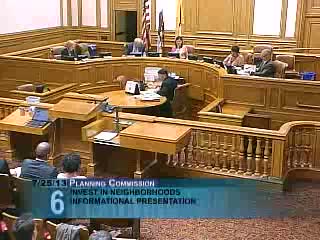
The San Francisco Planning Commission voted on July 25, 2013 to recommend that the Board of Supervisors and Planning Department pursue a citywide study of ‘formula retail’ controls and to work with OEWD on a consultant-prepared economic analysis.
Planning staff told commissioners there are “about 7 active proposals” before decision makers and recommended slowing structural changes so that data and analysis can inform citywide policy rather than adopting piecemeal legislative changes. Sophie Hayward briefed the commission on the evolution of formula-retail controls in San Francisco, noting that the first controls were adopted in 2004 and that a 2007 charter amendment requires conditional-use authorization for formula retail in NC districts.
Jenny Won, an intern in the Planning Department, summarized existing research and said much of the literature centers on big-box impacts in smaller cities and that few studies examine large, dense cities like San Francisco. Staff said the department planned to retain an economic consultant and aimed to return to the commission with a mid-study report in the fall.
Public testimony reflected a range of views. Didi Workman of the San Francisco Chamber of Commerce urged a pause on local legislation until the study is done and said she supported a citywide economic analysis but questioned whether the proposed $40,000 budget would be sufficient. BOMA’s codes committee likewise supported a study and asked for more robust funding. Neighborhood leaders including Pat Turra (DTNA) urged an open scoping process with community stakeholders. Retail industry speaker Ben Lazarevski warned against protectionism, arguing that some formula retailers are regionally scaled small businesses and warning of jobs impacts.
Commissioners debated scope, comparables, and public outreach. Several asked staff to include case studies from cities with urban form and scale similar to San Francisco and to examine different types of formula uses (for example, grocery or pharmacy vs. national chains). Staff said the plan was to secure an economic consultant from the city’s prequalified list and to partner with the controller’s office for additional analysis.
Commissioner Gordon moved to recommend further study and to develop a public process that allows community input on the scoping. The motion passed unanimously (4–0). The Commission recorded its recommendation that structural, citywide changes be informed by the forthcoming study and that, where supervisors will not hold legislation, staff advise that structural changes be made citywide rather than piecemeal.
Next steps: staff plans to select a consultant, carry out a short study, and return to the commission with interim findings; the motion does not itself change existing code or block individual supervisors from advancing legislation.