Get Full Government Meeting Transcripts, Videos, & Alerts Forever!
Get email alerts on the Healthcare Master Plan topic
No spam. Unsubscribe anytime.
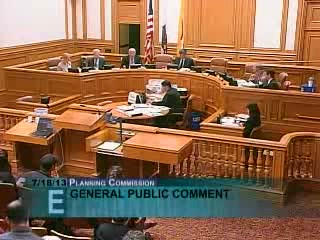
Planning Commission reviews draft Healthcare Services Master Plan, schedules joint hearing with Health Commission
Summary
Planning Department and DPH presented a draft Healthcare Services Master Plan outlining data-driven assessments of medical-space supply and recommendations for a consistency-determination process; community groups urged designation of Healthy San Francisco as a critical need and stronger attention to mental-health and transportation access.
The San Francisco Planning Commission on July 18 heard a multi-department presentation of the draft Healthcare Services Master Plan, a document required by Ordinance 300-10 that sets guidance for siting and evaluating medical uses in the city.
DPH Deputy Director Colleen Challa told commissioners, "This has been a long time coming," summarizing five required assessments and a sixth community health status assessment used to map health needs across neighborhoods. Planning staff said the plan finds roughly 25,000,000 square feet of existing medical space in the city, about 2,700,000 square feet in the development pipeline and a projected additional need of 3,500,000 to 4,200,000 square feet by 2035, leaving an estimated net need of 800,000 to 1,500,000 square feet once pipeline projects are counted.
The plan creates a "consistency determination" process so projects that convert or add medical space above size thresholds will be evaluated by DPH and the Planning Department. Liz Waddy of the Planning Department explained the possible determinations and their consequences: "These determinations will be based on a balanced assessment of a project as a whole," she said, and described three outcomes—"consistent and highly recommended," "consistent," and "inconsistent"—with posting of determinations and a 15-day comment period for appeals.
Community speakers pressed for more explicit priorities. Jimmy, representing the Chinese Progressive Association, said the group's survey work was incorporated into the draft and urged more geographically targeted siting: "We presented those 800 surveys to the health care services master plan task force," he said, noting that Chinatown already has many providers while Southeast neighborhoods lack services.
Multiple commenters, including an aide to Supervisor Campos and nurses' representatives, argued that guideline 3.1.14—preserving the Healthy San Francisco program and the employer spending requirement—should be identified as a critical need in the plan to protect coverage for undocumented residents and low-wage workers. Susan Fang of the Chinese Progressive Association urged that "guideline 3.1.14, preserving the Healthy San Francisco program should be marked as a critical need."
Speakers also urged stronger attention to mental-health capacity and to transportation and language access as barriers to care, especially in Southeast San Francisco neighborhoods. Staff acknowledged the concerns and said the plan is intended to be a living document with periodic updates; they also said a preliminary negative declaration (environmental determination) would be published soon and that the appeal period would run 30 days after publication.
Commissioners generally praised the cross-departmental process, recommended clarifying the plan's language on consistency determinations and mental-health services, and set a required joint hearing with the Health Commission. Staff indicated the joint hearing is scheduled for September 19 and that commissioners could request additional informational sessions if needed.
The next procedural steps include publication of the preliminary negative declaration, a 30-day appeal period once it posts, and the joint Planning–Health Commission hearing ahead of any recommendation to the Board of Supervisors.