Get Full Government Meeting Transcripts, Videos, & Alerts Forever!
Get email alerts on the Ceqa Ero Appeal topic
No spam. Unsubscribe anytime.
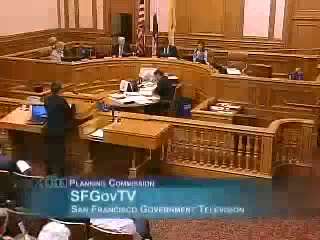
Planning Commission forwards trailing CEQA appeal ordinance to Board after split vote
Summary
Planning staff and supervisors debated an ordinance to allow appeals of Environmental Review Officer (ERO) determinations on exempt-project modifications. The Commission declined to recommend approval (3— 2) but forwarded the proposal to the Board of Supervisors without recommendation and recorded concerns about procedure and cost.
Amria Rogers, a Planning Department staffer, opened the discussion by outlining a trailing ordinance proposed by Supervisor Kim that would allow members of the public to appeal an Environmental Review Officer—s determination that a change to an exempt project is not a substantial modification. The draft sets a 10-day filing deadline for appeals, requires a hearing within 20 days (scheduled to coincide with the Planning Commission meeting), mandates video recording and web posting of hearings, and asks the ERO to reconsider decisions within 14 days of the hearing.
Supervisor Kim told the commission the trailing ordinance was the result of negotiation among supervisors and community advocates and is intended to give neighbors a limited public forum to present new information when staff determines an exempt modification does not trigger new CEQA review. Andres Power of Supervisor Scott Wiener—s office said Wiener—s support would be conditioned on language that explicitly keeps appeals from delaying entitlements or construction, makes the ERO hearing decision final, and allows the ERO to be represented by a designee.
Planning staff, represented by Anne Marie Rogers, argued against creating a new hearing process. Staff said recent Chapter 31 code changes narrow what constitutes a substantial modification and that existing appeal routes (for example, permit appeals and the Board of Permit Appeals) already address improperly issued permits. Staff warned a new hearing would add expense, consume staff time, and create delay opportunities without a proven need.
Advocates and neighborhood groups urged an ERO hearing as an accountability measure. They described the proposal as a limited, administrative remedy that would not halt projects but would permit public presentation of new information and require an ERO reconsideration in public.
After extended commissioner questions and public comments, a motion to recommend approval of the draft ordinance with Supervisor Wiener—s modifications failed on a 3— 2 roll call. Commissioners then voted unanimously to forward the item to the Board of Supervisors without a recommendation while documenting the 3— 2 vote and the commission—s concerns. The Board—s Land Use Committee and then the full Board will consider the trailing ordinance and the related Chapter 31 amendments.