Get Full Government Meeting Transcripts, Videos, & Alerts Forever!
Get email alerts on the Fee Deferral topic
No spam. Unsubscribe anytime.
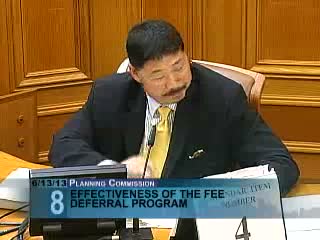
Planning Commission recommends sunsetting fee‑deferral program; staff to keep tool in reserve
Summary
After a multi-hour review and public comment, the Planning Commission voted 6–1 to recommend that the city allow the development impact fee‑deferral program to expire on July 1, citing improved economic conditions and programmatic lessons for future use.
The San Francisco Planning Commission on Thursday recommended that the Board of Supervisors allow the city’s development impact fee‑deferral program to expire on July 1, after a required review and extensive public comment.
Planning staff presented data showing the program—created in 2010 during the recession—was widely used but difficult to evaluate for stimulative effect. “There were 107 building permits eligible for deferral; about 63% enrolled, and approximately 93% of the eligible fee amount was deferred,” planning staff told the commission. The Department of Building Inspection reported outreach including a May 15 postcard sent to 6,319 contractors; DBI Deputy Director Pamela Levin said that effort produced 18 deferral requests so far.
Adam Vanderwater of the Office of Economic and Workforce Development said the program had provided marginal benefits to developers and could remain a useful tool if needed in a future downturn. “Our office maintains that this program is still of benefit on the margins,” Vanderwater said, while acknowledging the city’s economic conditions have materially improved since 2010.
Speakers at the hearing delivered sharply differing views. Community representatives including Alan Manalo and members of affordable‑housing advocacy groups urged the commission to let the program lapse so deferred impact funds would flow to neighborhood infrastructure and affordable‑housing projects. Calvin Welch of the Council of Community Housing Organizations said the city forfeited tens of millions in affordable‑housing mitigation: “$53,000,000 in affordable housing money was not paid,” he told commissioners.
Developers and architects argued the deferral option supported project feasibility and helped finance projects by rolling fees into construction loans; one architect, John Goldman, said the deferral materially improves project returns for developers.
After debate about down‑payment standards, seed‑fund complexity and interest rates, the commission voted to recommend the program expire as scheduled, 6–1, with Commissioner Antonini voting against. The staff recommendation keeps the program’s policy language and implementation lessons on file so the city can consider a revised model in the future if conditions warrant.
The Planning Commission’s recommendation goes to the Board of Supervisors, which has final authority to extend or end the program.