Get Full Government Meeting Transcripts, Videos, & Alerts Forever!
Get email alerts on the Public Comment Debate topic
No spam. Unsubscribe anytime.
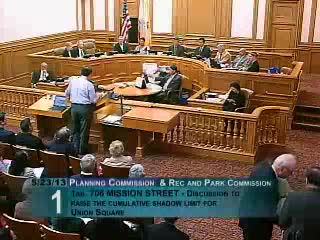
Split public reaction as San Francisco commissions weigh museum, shadows and Prop K
Summary
Supporters emphasized jobs, cultural representation and negotiated museum funding; opponents argued the commission should not erode Prop K sunlight protections and criticized last-minute changes to the EIR and feasibility analysis.
The hearing on the 706 Mission Street project became a focused public debate about balancing park sunlight protections with a package of public benefits and a permanent Mexican Museum.
Supporters — unions, the Hispanic Chamber of Commerce, the Yerba Buena Alliance and many individual residents — framed the proposal as a cultural and economic gain for the city. Manny Flores of the Carpenters Union and other labor speakers highlighted construction jobs and longstanding local ties; the Yerba Buena Alliance and the museum—s leadership emphasized museum programming, collections, and negotiated ongoing funding. As Victor Reyes Humana and David de la Torre (the museum director) said, the museum would deliver a permanent public institution for Latino arts and education.
Opponents said the project, even in its reduced form, violates the intent of Proposition K (1989) and the 1989 implementation memo that set absolute cumulative shadow limits for parks. Bill Maher, who authored Prop K, urged the commissions not to "overrule the voters" and suggested the only lawful way to change those protections is a ballot measure. Neighbors and preservation advocates argued the EIR and feasibility analyses did not fully disclose late design changes (including a Macy—s sunlight reallocation) and said a lower height could achieve museum goals without creating new shadow allowances.
The conflict threaded through commissioners— questions about the feasibility study and whether a smaller building could produce the same benefits. Project representatives and an independent peer reviewer hired by the successor agency (Kaiser Marston Associates) maintained that most reduced-height alternatives would not generate the endowment and other public benefits required to make the museum sustainable. The successor agency emphasized negotiated commitments including an $18 million core-and-shell contribution for the museum, a $5 million endowment, an estimated $11 million Aronson Building rehabilitation, and an ongoing annual contribution for Yerba Buena Gardens operations.
The hearing ended with narrow 4–3 votes approving CEQA findings, a small increase in Union Square—s cumulative shadow budget (0.06% allocation, stated to translate to roughly 0.01% net new physical shadow after adjustments), allocation of that budget to the project, and the Planning Commission—s entitlements approvals. Proponents hailed the decision as a step toward completing the Yerba Buena cultural district and establishing a permanent Mexican Museum; opponents said they were considering legal options and urged further review of alternatives and EIR completeness.
The commissions recorded conditions requiring additional design development for the museum base to ensure compatibility with the Aronson Building and set limits on residential parking (1:1) with surplus garage spaces available to the public. Staff must issue revised CEQA findings and updated entitlement motions that reflect the final approved project description and any conforming changes before permits proceed.