Get Full Government Meeting Transcripts, Videos, & Alerts Forever!
Get email alerts on the Public Art Pioneer Monument topic
No spam. Unsubscribe anytime.
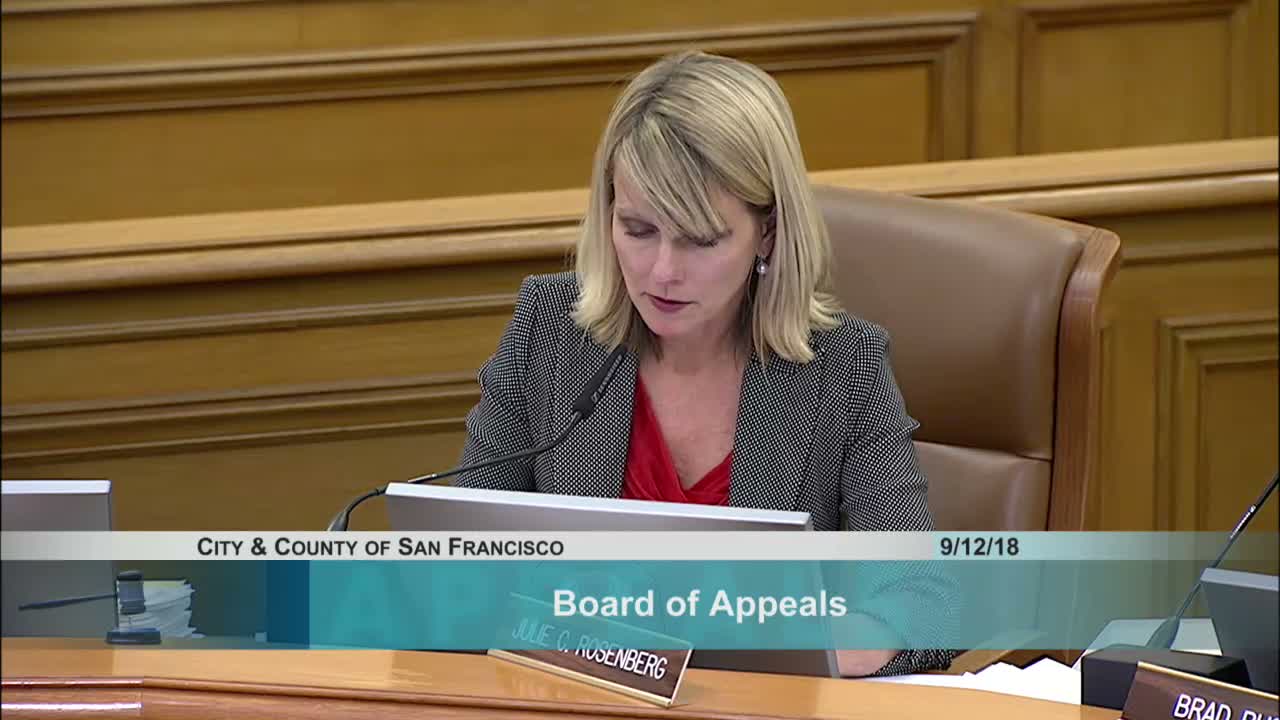
Board of Appeals upholds Arts/Historic Commissions; allows removal of 'Early Days' sculptural group
Summary
The San Francisco Board of Appeals on Sept. 12 denied an appeal challenging the Historic Preservation Commission’s Certificate of Appropriateness to remove the Early Days sculptural group from the Pioneer Monument, siding with the Arts Commission and HPC and preserving the city’s established removal process.
The San Francisco Board of Appeals denied an appeal on Sept. 12 and upheld a Certificate of Appropriateness issued by the Historic Preservation Commission that allows the Arts Commission to remove the Early Days sculptural group from the James Lick Pioneer Monument and place it in museum‑grade storage.
The decision preserves the Arts Commission’s authority under the city charter to "approve the design and location of all works of art" on city property, the Arts Commission said during the hearing. Tom DeKaney, director of cultural affairs, told the board the Arts Commission "voted unanimously to remove the early day statue and place it in fine arts storage, not destroy it," and that the commission had followed its policies and the charter.
Why it matters: the case became a flashpoint for competing legal and moral claims about public art, historic preservation and the civic role of monuments. The appellant, Stefan (Stephen) Schmidt, argued removal would violate state law protecting fine art and that the sculpture is a legally protected historic artifact. He told the board that allowing removal would be "an alteration, if not a mutilation, if not a destruction" of a work of fine art.
Board discussion and finding: Historic preservation staff explained the COA was issued after applying the Secretary of the Interior’s rehabilitation standards and CEQA findings. Tim Frey, historic preservation officer, said the monument is a component of the Civic Center Historic District and that the standards allow reversible changes to features within a district. Planning staff and the Arts Commission told the board the scope before the Historic Preservation Commission was limited — removal of one sculptural element — and that the action is reversible and within the Arts Commission’s charter authority.
Public response: Dozens of speakers, including Native American community members, tribal representatives and the Human Rights Commission, pressed the board to allow removal, saying the sculpture depicts demeaning and historically inaccurate imagery and retraumatizes indigenous people. Valley Brown, who identified themself as a Native American and a supervisor, urged the board: "Let's remove this statue now and let's stop this nonsense." Opponents framed their objections as preservation of historical artifact and free‑speech concerns.
Legal context and next steps: During the hearing the Arts Commission and staff reviewed legal exposures (including the California Art Preservation Act and the federal Visual Artists Rights Act) and concluded those protections do not bar relocation or storage in this case. The Arts Commission estimated conservation and removal, plus about 10 years of storage and associated conservation work, at roughly $120,000. The Board of Appeals voted to deny the appeal and uphold the COA; the board recessed and adjourned after that motion passed with a majority.
The outcome leaves the Arts Commission authorized to proceed with removal and storage subject to standard conservation practice; the board’s written decision will state the specific findings and reasoning and will be posted to the commission’s records.