Get Full Government Meeting Transcripts, Videos, & Alerts Forever!
Get email alerts on the Ucsf Lrdp topic
No spam. Unsubscribe anytime.
UCSF outlines growth plans through 2035, says it expects 31% space increase and more housing
Summary
UCSF presented a long-range development plan to the Planning Commission proposing seismic upgrades, more research and housing capacity and a 31% increase in campus square footage to about 10.5 million square feet by 2035; the presentation emphasized coordination on the forthcoming EIR and transportation demand management measures.
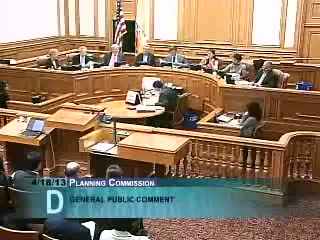
UCSF presented its long-range development plan (LRDP) to the San Francisco Planning Commission on April 18, describing campus goals through 2035 and seeking feedback on initial proposals. Lori Yamauchi, assistant vice chancellor for campus planning, said the plan is driven by seismic needs, programmatic growth and the university’s commitment to sustainability.
The university said it currently occupies roughly 8 million gross square feet across multiple city sites and anticipates growing to about 10.5 million gross square feet by 2035, a roughly 31 percent increase, excluding structured parking. Key themes Yamauchi listed were addressing seismically vulnerable buildings, optimizing existing land and providing campus housing through conversion and limited new construction at Parnassus and Mission Bay. UCSF plans to open a new hospital at Mission Bay in 2015 and to repurpose Mount Zion as an outpatient hub as inpatient services shift there.
Yamauchi described site-specific proposals: retrofit and reuse of historic UC Hall at Parnassus for housing and offices; demolition of smaller peripheral buildings; a Moffitt hospital replacement footprint at Parnassus; incremental expansion at Mission Bay on existing holdings (no new land acquisition under the LRDP); and a developer-led redevelopment process for the Laurel Heights lower site that would follow CEQA and city entitlement processes. She said the LRDP will be accompanied by an environmental impact report and that the draft plan and EIR are expected in 2014, with regional certification and adoption later that year.
Commissioners asked about Mount Sutro open-space protections (Yamauchi said the 61-acre permanent open-space reserve is governed by Regents policy and not proposed for development), preservation options for historic brick buildings at San Francisco General (UCSF said it expects to vacate and return many brick buildings so the city may consider reuse or retrofit), and transportation and parking strategies for increased outpatient services. Yamauchi said UCSF will rely on shuttles, vanpools, pre-tax transit programs, and additional transportation-demand-management measures while coordinating with city agencies on an EIR working group.
Yamauchi also noted UCSF receives large research funding (more than $530 million from NIH in 2011) and said the LRDP process has included community advisory groups and site-specific workshops. The presentation closed with an offer to continue close coordination with city planning staff on detailed EIR timing and mitigation measures.
The Planning Commission did not vote on the informational presentation; commissioners emphasized the need for continued coordination on community impacts, parking, and reuse of historic hospital buildings.