Get Full Government Meeting Transcripts, Videos, & Alerts Forever!
Get email alerts on the Telecom Permitting topic
No spam. Unsubscribe anytime.
Board upholds permit for Verizon wireless facility at 443 Haight after neighbor protests
Summary
The Board of Appeals rejected challenges to the 443 Haight Street permit, finding Department of Public Works, Planning and Public Health reviews met Article 25 and CEQA procedures; commissioners concluded notice and technical reviews did not legally require overturning the permit.
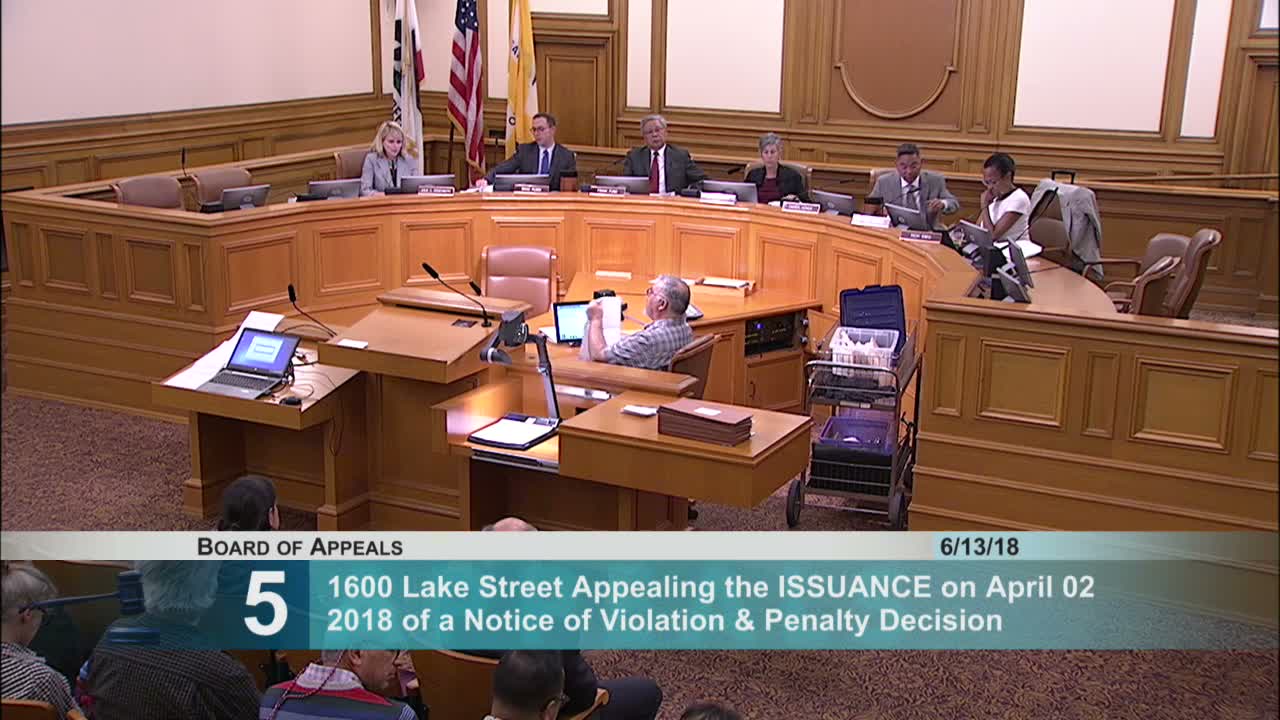
The San Francisco Board of Appeals on June 13 considered an appeal by neighborhood residents challenging a tentative and final permit for a Verizon Wireless personal wireless service facility at 443 Haight Street and voted to uphold the permit.
Appellant Thea Selby and her husband Robert Johnstone argued the applicant failed to give required notice to tenants, did not adequately consider historic‑district impacts and submitted a flawed CEQA categorical exemption form. Selby said the affidavit of noticing listed owners but not tenants and that the posted notice was either absent or late. "This permit should be denied for three reasons: notice was faulty, inadequate historic preservation consideration, and bad faith in outreach," Selby said.
Verizon outside counsel Paul Albritton defended the application, saying the company mailed notices, posted information on the block, and that the Department of Public Health reviewed RF emissions and found exposure levels far below federal limits. RF engineer Bill Hammett testified the proposed facility is low power and that post‑installation testing would be available to neighbors.
Public Works staff member Amanda Higgins explained the department’s interpretation of Article 25 notice: applicants mail owners and residents within a 150‑foot radius (derived from assessor/tax records) and are required to post notices "throughout the block"; the department concluded Verizon met section 15.12 noticing requirements. Planning staff Marcela Boudreaux described the planning review (tier B compatibility) and CEQA categorical exemption practice.
Many neighbors testified about perceived health risks, cumulative RF exposure from nearby antennas, inadequate tenant notice and potential impacts to historic Victorians on the block. Verizon and city officials responded that measured levels are below standards, applicants must post and mail per code, and that any modification of the facility would require re‑approval and post‑installation testing upon request.
After deliberation Commissioner Daryl Honda moved on procedural grounds and commissioners recorded votes consistent with finding the permit had been properly issued under Article 25. The board declined to overturn the permit; the decision preserves departmental conditions, including post‑installation testing and a requirement that any modification be resubmitted for review.
Next steps: parties retain administrative remedies allowed by statute; post‑installation RF testing is available by request under Department of Public Health conditions.