Get Full Government Meeting Transcripts, Videos, & Alerts Forever!
Get email alerts on the Land Use topic
No spam. Unsubscribe anytime.
Board upholds Planning Department determinations on 799 Castro Street; neighbor appeals denied
Summary
After hearing competing legal briefs and testimony, the Board of Appeals denied appeals of a Planning Department letter of determination and a rear-yard variance for a proposed demolition and replacement at 799 Castro Street, finding the zoning administrator and planning staff did not abuse discretion.
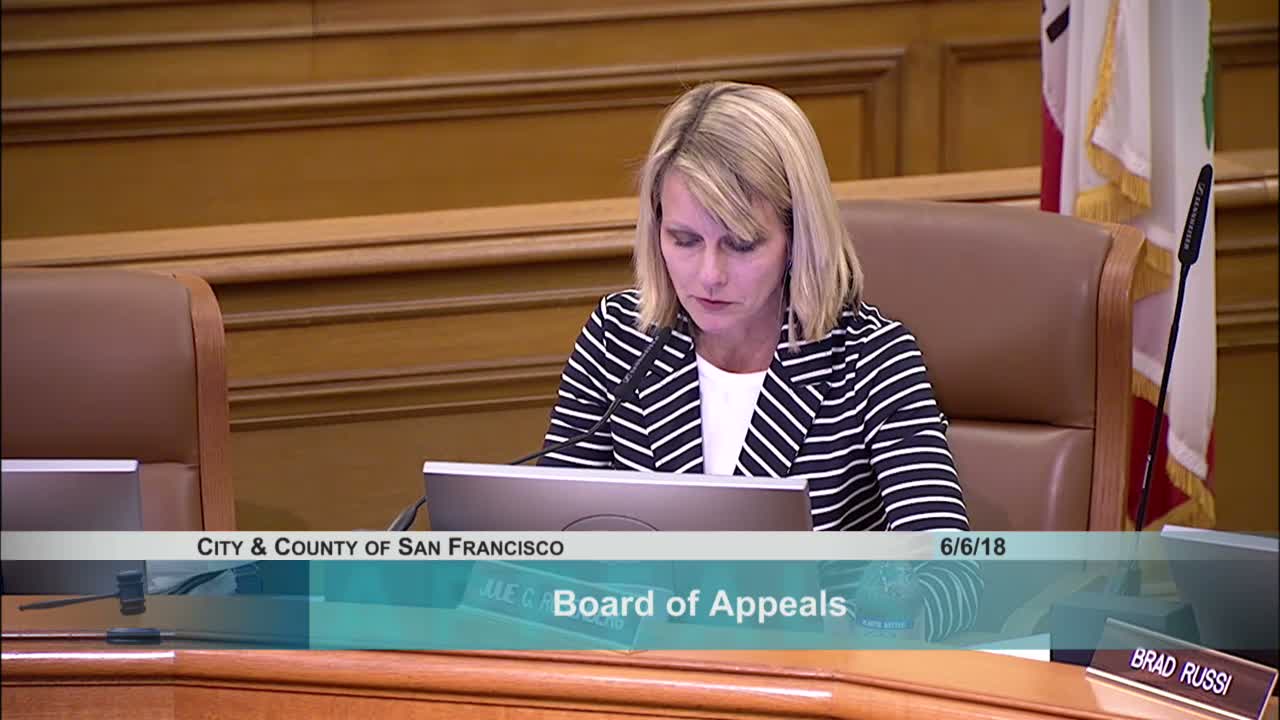
The San Francisco Board of Appeals on June 6 denied two related appeals challenging the planning process for a proposed demolition and replacement at 799 Castro Street.
Neighbors Andrew Zacks and Denise Ledbetter had appealed a Planning Department letter of determination and a separate rear-yard variance, arguing the sequence of approvals (conditional-use authorization to demolish, variance, and building permits) improperly allowed demolition before a final replacement plan was fully authorized. Appellant counsel Ryan Patterson said approving demolition before the variance and a final building permit “turns the process on its head” and risks eliminating an existing rent-controlled unit.
Property owner counsel Tom Tunney and the Planning Department (Scott Sanchez) countered that the letter of determination and related approvals followed longstanding practice and code interpretation. Planning staff said the letter of determination is not an entitlement and that the planning code ties demolition approvals to replacement proposals in several sections; Planning Department staff also noted the Planning Commission and Board of Supervisors had reviewed aspects of the project, including a conditional-use authorization that the supervisors upheld on appeal.
The rear-yard variance drew focused debate about five legal findings required for a variance. Appellants contended the proposal increases nonconformity, creates material harm to adjacent properties, and is not a reasonable use of the lot. An appraiser engaged by the appellant estimated a negative impact of about $325,000 on an adjacent property if the proposed project is built as proposed. Project counsel and Planning Department staff argued the lot is a constrained corner parcel with unique historic development and that the revised project is smaller and more contextual than earlier iterations.
After de novo consideration, the board concluded the zoning administrator and planning staff reasonably applied the code and denied both appeals. The board also noted concessions in the project plans — including a deeper front setback and a notch to protect a neighboring window — and that the final project included replacement dwelling units so net density would be preserved.
Next steps: with the appeals denied the permitting and entitlement process for the property proceeds through the remaining planning and building-permit channels, subject to any further appeals.