Get Full Government Meeting Transcripts, Videos, & Alerts Forever!
Get email alerts on the Pioneer Monument Early Days topic
No spam. Unsubscribe anytime.
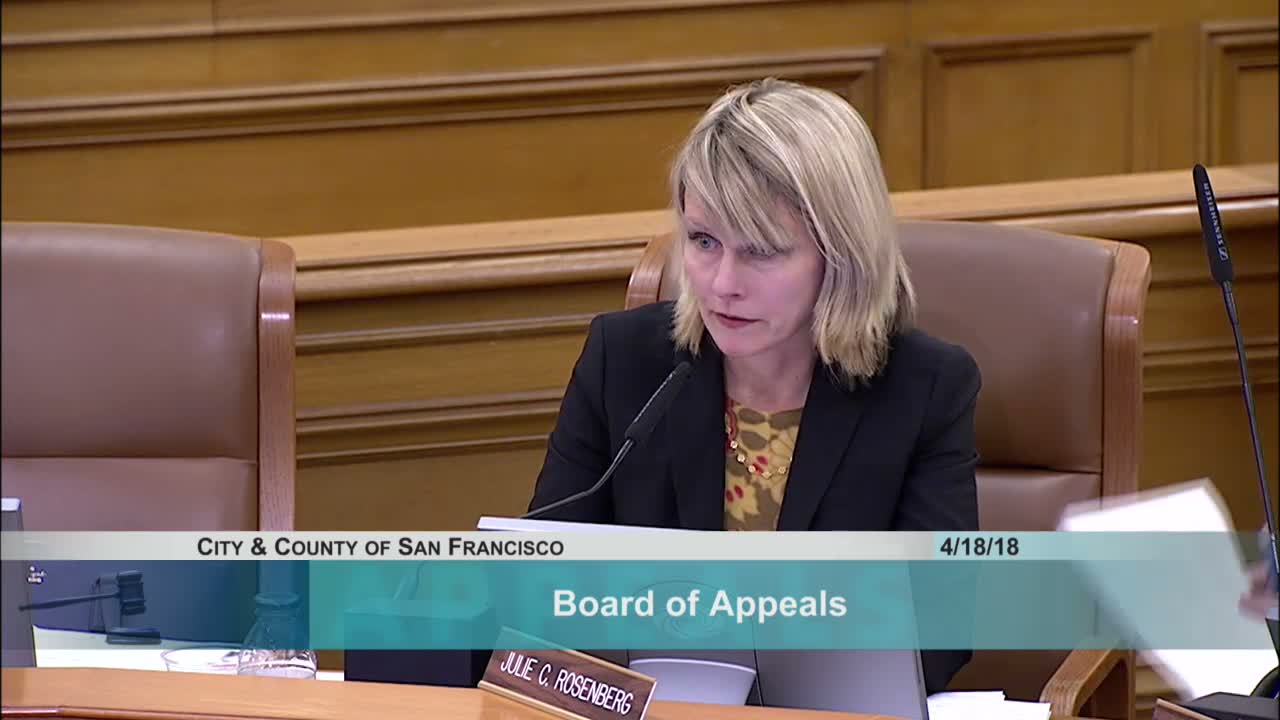
Board of Appeals grants appeal of Historic Preservation Commission’s certificate allowing removal of ‘Early Days’ sculpture
Summary
On April 18 the Board of Appeals granted an appeal challenging the Historic Preservation Commission's certificate of appropriateness for removal of the 'Early Days' sculptural group, finding the HPC’s review inconsistent with typical standards; the decision will require further administrative follow‑up.
The San Francisco Board of Appeals granted an appeal on April 18 challenging the Historic Preservation Commission’s February 21 certificate of appropriateness that authorized removal and storage of the 'Early Days' sculptural group at the Pioneer Monument.
Appellant Freer Stephen Schmid argued the removal was tantamount to destroying art and urged the board to apply the California Art Preservation Act and secretary‑of‑interior standards. He called the sculpture a century‑old civic‑center artwork that prompts historical questions and said removal was inconsistent with preservation principles.
Lisonbee Cummings, senior registrar for the San Francisco Arts Commission, and Planning Department staff outlined the Arts Commission’s charter authority (cited in the meeting) and described a public process, including unanimous Arts Commission and Historic Preservation Commission votes and staff findings that removal reflected significant adverse public reaction over time and met Article 10 and Secretary of the Interior standards as applied by HPC. The Arts Commission said the sculpture would be preserved in fine‑art storage, not destroyed, and that a plaque would be installed to explain removal.
After extensive public comment—many speakers from Native American communities and preservation professionals testified in favor of removal as a corrective to a historically harmful depiction, while others urged preservation of the sculpture as an object that stimulates debate—Commissioners focused on whether the HPC applied its usual standards in reviewing the certificate of appropriateness. Several board members concluded the Historic Preservation Commission’s review was inconsistent with its typical practice and did not satisfy Standard 2 of the Secretary of the Interior’s standards.
Vice President Rick Swig moved to grant the appeal on the basis that the Historic Preservation Commission acted inconsistently with its standard review practices and did not satisfy Standard 2 of the Secretary of the Interior standards; the motion passed and the appeal was granted. The board’s action remands the matter for additional administrative review consistent with the board’s findings; the Arts Commission and Historic Preservation staff will have to address the board’s identified procedural and standards‑based concerns.