Board of Appeals revokes 1709 Broderick permit after finding required neighborhood notice wasn’t issued
Loading...
Summary
The San Francisco Board of Appeals voted to deny the building permit for 1709 Broderick Street on Jan. 10, 2018, finding the Planning Department failed to issue a required block-book neighborhood notification. Neighbors had urged revocation, citing large crowds, traffic and safety risks tied to the house’s association with the TV show Full House.
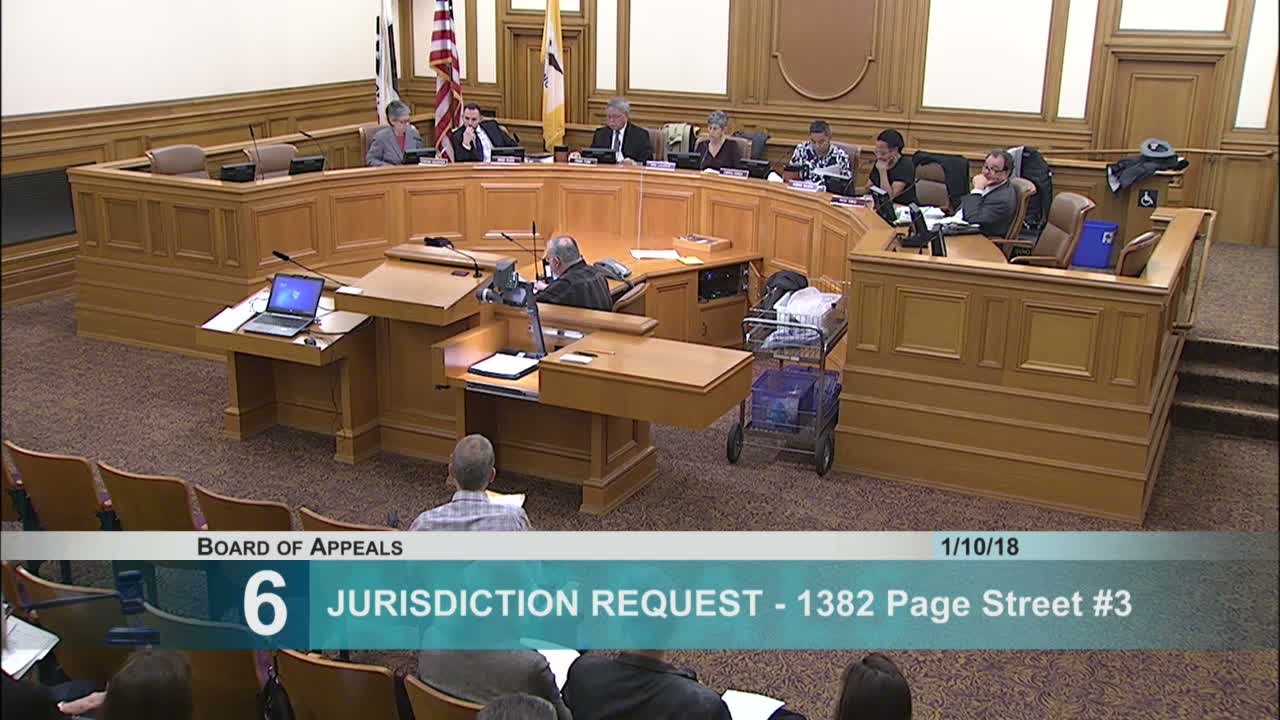
The San Francisco Board of Appeals on Jan. 10 revoked the building permit for 1709 Broderick Street, commonly known as the Full House house, after finding the Planning Department failed to issue a required block-book neighborhood notification before the permit was issued.
Neighbors and appellants told the board the owner’s restoration and publicity had turned the block into a tourist destination that creates noise, traffic congestion, litter and safety risks. “This appeal is about changing a house on a previously quiet residential block into a TV show shrine,” said Craig Baum, a neighbor and appellant, describing videos and time-lapse evidence of frequent fan crowds.
The appellants argued the permit was issued with procedural defects (missing block-book notice and problematic CEQA sequencing) and that the scope of some exterior features — notably a two-story side bay and a roof deck — risked encouraging commercial visits and unsafe street activity. Appellants asked the board to revoke the permit or, if the board allowed it to stand, to adopt a set of conditions recommended by the Planning Commission including removal of the roof deck and two-story bay, a reinstalled locking gate and other mitigations.
Permit holder Jeff Franklin, who identified himself as the owner and executive producer of Full House and Fuller House, said he bought the property for preservation and residential renovation. “I planned on commencing a much needed renovation,” Franklin told the board, adding that he had agreed to remove the roof deck and two-story bay to work with neighbors. Franklin said fan visits predated his ownership and stemmed from the show’s enduring popularity; he said limited, permitted promotional events did not convert the property to commercial use.
Planning and building staff described a complicated permit history. Scott Sanchez, zoning administrator, said the comprehensive permit at issue was issued on March 22, 2017 and suspended March 28, 2017 after staff learned the block-book notice had not been applied. DBI inspector Joe Duffy testified that the permit-related interior work had been reviewed and that separate foundation and kitchen/bath permits existed; he said DBI fines of $1,118.76 had been paid but that planning penalties related to the group-housing-style violations could be much larger if they accrued over time.
Neighbors gave consistent accounts of large and recurring crowds on the block, with one neighbor estimating 250–300 visitors per hour and an aggregate claim of “at least 250,000 people on our street in the last year.” Speakers described blocked driveways, double parking, honking, fights and risks to pedestrians and children; several asked for a notice of special restriction recorded with the property to bar promotional or filming uses in the future.
Counsel for the owner, Elizabeth Bridges, argued the permit was an ordinary, code-compliant residential remodel and that many of the appellants’ requested conditions (hours limits, use restrictions) would be improper on a building permit and must instead be addressed through other permit types or enforcement if an actual change of use occurred.
After deliberation focused on the procedural defect — the failure to issue the block-book notice required when planning review is triggered — the board voted to grant the appeal and deny the permit. The motion to revoke the permit was made on the basis that the Planning Department issued the permit in error by failing to provide the required block-book notification. The motion carried; the board recorded four votes in favor and one against, and the permit was denied.
The Board made clear that revoking the permit would not, by itself, resolve the neighborhood’s larger concerns about visitors on the public right of way; staff and commissioners discussed other enforcement and mitigation paths, including the Planning Commission’s recommended conditions if a subsequent permit is filed that triggers discretionary review. The board continued other process details to staff, noting that the owner could reapply and that any future permit could be subject to the full notification and review process.
The board’s decision leaves open enforcement options under the Planning Code and potential follow-up permitting paths, and it resets the approvals that were previously in place for the house’s exterior work. The board concluded the matter at the Jan. 10 meeting; no immediate criminal or civil penalties were imposed as part of the denial, and staff offered to work with parties on next steps.