Get Full Government Meeting Transcripts, Videos, & Alerts Forever!
Get email alerts on the Successor Agency topic
No spam. Unsubscribe anytime.
Successor agency created to wind down San Francisco redevelopment obligations, staff outlines role and limits
Summary
City and mayor’s office officials described how state law (AB 1484/AB 26) requires a new successor agency to oversee the winding down of redevelopment obligations for major plan areas such as Mission Bay, Hunters Point and Transbay, while preserving implementation continuity and financial oversight.
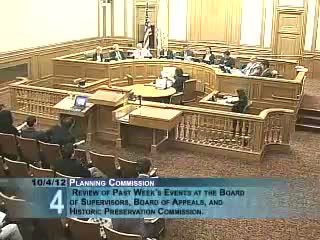
Tiffany Bohee, director of the successor agency to the former redevelopment authority, told the Planning Commission that state legislation dissolving redevelopment left the city with a complex set of surviving contracts that must be paid and implemented. She said the successor agency’s role is narrowly focused on finishing and winding down those obligations, not making new redevelopment policy. "The goal is to finish and wind down," Bohee said, noting major approved project areas include Hunters Point, Mission Bay and Transbay.
Jason Elliott of the mayor’s office said the city sought and received permission from the California Department of Finance to retain implementation functions locally where feasible but said AB 1484 created a separate legal entity for successor agencies that requires new governance structures. He described the result as redundant but necessary to comply with state law.
Commissioners asked how the successor agency would interact with the Board of Supervisors, planning staff and other city bodies when matters involve development approvals, tax increment distribution and large institutions such as UCSF. Bohee said the oversight board retains fiduciary review for obligations-payment schedules while the successor agency commission — five mayoral appointees including residents from Districts 6 and 10 — will manage implementation details and staff.
On finances, staff explained that where ongoing contracts exist, tax-increment flows follow contractual formulas (roughly 60% for infrastructure, 20% for affordable housing and 20% for taxing entities) until obligations are retired; other areas without surviving obligation will see increment flow to the general fund. Commissioners also discussed staffing and meeting cadence; staff said oversight work is frequent and the oversight board typically meets twice a month.
The informational hearing clarified that Treasure Island and certain other projects are not in the successor agency jurisdiction, and that the state Department of Finance retains ultimate auditing and oversight authority. The commission did not take action; staff said further hearings and appointments will follow as the successor agency and oversight board roles are implemented.