Get Full Government Meeting Transcripts, Videos, & Alerts Forever!
Get email alerts on the Historic Preservation topic
No spam. Unsubscribe anytime.
Planning commission disapproves redevelopment plan that would demolish 1601 Larkin United Methodist Church
Summary
After years of debate and a legal lawsuit over demolition, the commission voted unanimously to disapprove a revised plan that would demolish the historic First Saint John's Methodist Church at 1601 Larkin. Speakers urged preservation or adaptive reuse and noted litigation and RLUIPA concerns.
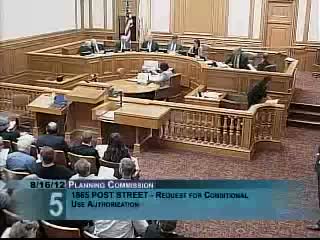
The Planning Commission on Aug. 16 unanimously voted to disapprove a proposal that would demolish the former First Saint John's United Methodist Church at 1601 Larkin Street and build a six‑story condominium project.
Staff said the project posed compatibility concerns with surrounding neighborhood scale and noted the existing church is considered an historic resource under CEQA. Public commenters including neighborhood preservation groups and senior‑housing advocates urged the commission to preserve the church or pursue an adaptive reuse plan. Frank Cannata of the Bridal Public Neighborhood Association described a long history of neighborhood opposition to demolishing the structure.
Gordon Egan, representing the ownership (the California and Nevada Annual Conference of the United Methodist Church), said the owners have filed litigation in federal court seeking a demolition permit and argued the city must consider federal religious‑land‑use protections. "We have filed a lawsuit in the United States District Court demanding that the city issue us a demolition permit," Egan said, adding his clients contend denial would raise RLUIPA issues.
After extended public comment and deliberation the commission moved to disapprove the conditional use authorization. The motion passed unanimously. Planning staff said the decision does not end the legal process between the parties; the zoning administrator and the courts retain roles in the demolition permit review.
The commission's vote formalizes earlier expressions of concern about massing and the demolition of a building identified as an architectural resource, and it keeps open the possibility that a different project or negotiated adaptive reuse could be pursued in the future.