Get Full Government Meeting Transcripts, Videos, & Alerts Forever!
Get email alerts on the Transportation Fees topic
No spam. Unsubscribe anytime.
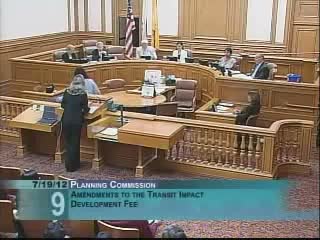
Planning Commission backs update to transit impact fee with policy credits and extended grandfathering
Summary
The Planning Commission on July 19 recommended updates to the citywide Transit Impact Development Fee (TIDF): lower the exemption threshold, expand covered uses, adopt a policy-credits program for small businesses and reduced-parking projects, and extend grandfathering for nonprofit and net-new uses to January 2014.
The San Francisco Planning Commission on Thursday voted unanimously to recommend a package of changes to the city’s Transit Impact Development Fee intended to better align fee structure with a recent SFMTA nexus study and the proposed Transportation Sustainability Program.
Planning Department senior staff Alicia Jean Baptiste told commissioners the draft ordinance lowers the current exemption threshold from 3,000 gross square feet to 800, expands the types of uses subject to the fee (including certain nonprofit, institutional, PDR, automotive services and wholesale storage uses), clarifies prior-use credit timing, and adjusts administrative roles among Planning, DBI and the SFMTA. She said the revised fee rates would generally increase most categories but set rates no higher than 68% of what the nexus allows.
“Money generated from the fee is directed to the MTA and used to fund muni capital improvements and system maintenance,” Baptiste said, noting that the Transportation Sustainability Program (TSP) — currently undergoing an EIR — would replace the TIDF if adopted.
Small-business advocates and developers urged caution about the lowered 800-square-foot threshold. Chris Shulman, representing the Small Business Commission, told the Planning Commission the commission had unanimously recommended either keeping the 3,000-square-foot threshold in place or, alternatively, adopting a policy-credits program to protect small businesses. Shulman recommended making nonformula retail small businesses in existing vacant space eligible for large fee credits to reduce barriers to leasing small storefronts.
A development consultant, Steve Cooklin, asked for grandfathering for projects already in the planning pipeline — particularly projects that include wholesale storage — because the new assessments could render those projects infeasible.
Staff recommended several modifications to the draft ordinance in response to such concerns: adopt a policy-credits program (to allow fee waivers or reductions for priorities such as small businesses, affordable housing and reduced parking), extend the grandfathering period for nonprofit and institutional uses to January 2014, retain a five-year prior-use window for inactive uses, and clarify collection and appeal procedures when the MTA assesses fees.
After questions about fee units, timing of assessment (site permit), and how the fee relates to parking and trip generation, Commissioner Gwyneth Borden moved to approve staff recommendations plus a policy-credits program and extended grandfathering that would also cover newly included uses. The motion, which included asking policymakers to consider a 100% policy credit for eligible small businesses up to a 5,000-square-foot cap under the credit program, passed unanimously.
The Planning Department will forward its recommendations and the commission’s suggestions to the Board of Supervisors and to the Land Use Committee for hearings later in the fall, with staff expecting possible Board consideration in October and implementation thereafter if adopted. Meanwhile the TSP remains subject to an environmental review process anticipated to conclude in late 2013.