Get Full Government Meeting Transcripts, Videos, & Alerts Forever!
Get email alerts on the Telecom Infrastructure topic
No spam. Unsubscribe anytime.
Board upholds small‑cell wireless permits after residents raise RF and visual concerns
Summary
Residents urged the Board of Appeals to block small‑cell antenna permits at multiple San Francisco locations, citing health and proximity to homes and schools. The board heard technical reports and Public Health review, and denied the appeals, finding the applications met applicable RF and planning standards.
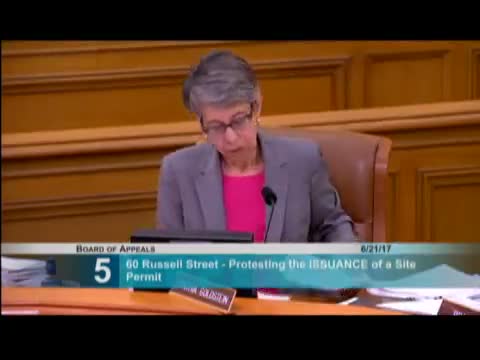
The San Francisco Board of Appeals heard three contested appeals on June 21 challenging Department of Public Works permits for small‑cell wireless facilities at multiple locations, including a pole near 627 Taylor Street and sites on Second Street and Visitacion/other locations. Appellants argued potential health risks from radio frequency emissions and that installations were too close to residences and schools.
Barbara Traub, appellant for the 627 Taylor Street case, said the proposed pole placement “about 15 to 20 feet from my residence” posed health and environmental concerns and cited studies she said showed biological effects from low‑intensity RF exposure. Multiple residents also urged a moratorium on broader small‑cell deployment pending further study.
Permit holders, represented by Verizon counsel Paul Albritton and by Extonnet/contractor representatives, presented engineering reports and said the proposals complied with Department of Public Health and DPW standards under local Article 25. “We’re approaching 400 of these facilities in San Francisco,” counsel said in describing the city’s small‑cell rollout, and permit counsel noted Department of Public Health and Planning review had concluded the designs met applicable standards.
DPH and Public Works staff testified about the application process and monitoring: Amanda Higgins of Public Works described the application timeline and the requirement that applicants provide registered professional engineering reports demonstrating compliance; RF expert Raj Mathur testified that pre‑installation studies are conservative and that measured post‑installation readings typically are “anywhere from 5 to 20 times lower than the levels we calculated.” Post‑installation testing and periodic compliance checks were discussed as mechanisms to verify actual exposures.
After testimony and technical questioning, the board moved to deny the appeals and uphold the DPW permits on the basis they were properly issued and compliant with applicable standards. Roll calls for the related motions recorded unanimous 4–0 votes among participating commissioners (one commissioner absent earlier in the meeting), and the permits remain in place subject to standard permit conditions and DPW/DPH oversight.
The board’s decisions do not change federal preemption rules under Title 47 or FCC standards; they reflect the board’s assessment that the record presented met the local compliance requirements reviewed by city agencies.