Get Full Government Meeting Transcripts, Videos, & Alerts Forever!
Get email alerts on the Permits And Tenant Dispute topic
No spam. Unsubscribe anytime.
Board upholds permits for 2691 Twentieth Avenue after heated dispute over expired permits and tenant access
Summary
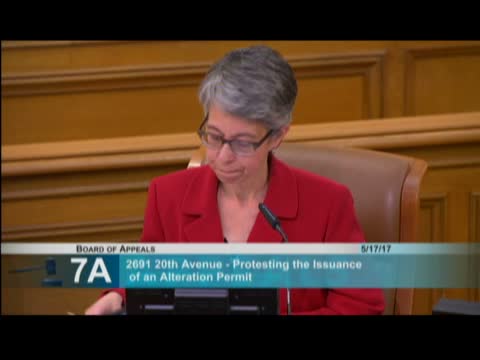
The San Francisco Board of Appeals heard competing claims over expired building permits and tenant access at 2691 Twentieth Avenue and, after debate, failed to reach the four votes needed to overturn the permits; with no prevailing motion the permits remained upheld by operation of law.
The San Francisco Board of Appeals on May 17 considered three consolidated appeals tied to 2691 Twentieth Avenue, where neighbors and tenants challenged a series of building and electrical permits and the owner sought to remove an unauthorized unit. Appellants’ counsel Salvatore Timpano argued the permits had expired multiple times under California building code provisions and were improperly reissued after the March 2016 planning-code changes, meaning the work should have been treated as new and routed through the Planning Department.
Permit-holder trustee Sarah Connors and counsel Daniel Bornstein said the permits were sought to comply with a Department of Building Inspection (DBI) notice of violation and that access was repeatedly denied by tenants, delaying inspections and finalization. Connors described action taken “to revert the garage unit to its original permitted condition by removing a gas stove and a kitchen sink” to comply with DBI and said she had made relocation payments and sought to vest rights consistent with earlier permit activity.
Planning Department staff Scott Sanchez told the board that the property sits in an RH-1 zoning district and that recent code changes require a conditional use authorization for removing unauthorized units in many circumstances; Sanchez said that whether rights had vested depended on whether substantial work had been done in reliance on the original permits. DBI staff (Bernie Curran) explained the department’s renewal and renewal-number practices and confirmed that renewals can create appealable entries.
Commissioners repeatedly distinguished landlord–tenant disputes from the narrow legal question before them: whether the permits at issue were validly extended or should now be subject to Planning review. Commissioner Anne Lazarus moved to grant the appeal and deny the three permits on the basis they were improperly issued and required Planning Department review. That motion received only two votes and failed to reach the four-vote threshold. With no alternative motion winning majority support, the board recorded that the permits were upheld by operation of law.
The hearing record includes extensive conflicting factual claims about when work began, whether notices of entry were attempted or honored, the timeline of permit expirations and renewals, and whether relocation payments had been accepted. Several tenants and neighbors testified about housing impacts and alleged delays in enforcement; owners and contractors presented inspection logs and asserted they had sought to renew permits when access was delayed.
What happens next: the commissioners noted the matter may proceed to further administrative or judicial review given its factual complexity and the parties’ statements that litigation may continue.