Get Full Government Meeting Transcripts, Videos, & Alerts Forever!
Get email alerts on the Transportation Streetscape topic
No spam. Unsubscribe anytime.
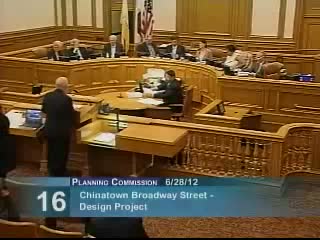
City design group outlines Caltrans environmental‑justice grants for Chinatown Broadway and Cesar Chavez corridors
Summary
Planning staff updated the commission on two Caltrans environmental-justice planning grants: a Chinatown Broadway Street design focused on pedestrian safety, bulb-outs and reallocation of a tow-away lane; and a Cesar Chavez East community design plan emphasizing outreach, two bike-lane profiles and preserving industrial uses. Staff described next steps including pilots, MTA approvals and capital-funding seeks.
Planning staff presented two Caltrans environmental‑justice planning grants to the commission on June 28: a Chinatown Broadway Street design project and a Cesar Chavez East Community Design Plan. Both projects used engaged outreach with community-based organizations and prioritized safety, equity and neighborhood identity in corridors that combine high pedestrian or truck/industrial use.
Lily Langwa described the Broadway plan’s findings: Chinatown has a high share of seniors and pedestrians; Broadway is a wide arterial with fast-moving traffic and truck use; the preferred concept removes an eastbound tow-away lane, provides two travel lanes each direction, adds corner bulb-outs and raised crosswalks, improves bus-stop locations, and creates parking and streetscape amenities to calm traffic and improve the pedestrian environment. Staff said a temporary trial of bulb-outs and a prohibition on certain right turns could be piloted in coordination with the Municipal Transportation Agency (MTA).
Ilaria Salvadore outlined the Cesar Chavez East plan, emphasizing a complex industrial-residential corridor that serves workers, trucks and commuters. Outreach included focus groups, stakeholder interviews, walking tours and university partnerships. The plan developed two bike-lane profiles (buffered lanes or a south-side cycle track) while maintaining vehicle capacity because freeway access remains essential. Staff recommended phased implementation, interagency coordination (MTA, DPW, PUC) and pilot projects to test improvements before seeking capital funds.
Commissioners praised the depth of outreach (materials available in Cantonese for Chinatown and targeted meetings for day-shift workers on Cesar Chavez), asked about peak-hour definitions and truck-loading impacts, and emphasized the need to monitor related projects (Van Ness BRT, Hunters Point redevelopment) to avoid unintended traffic consequences.
Staff said the grants produced community-driven design frameworks intended to support future capital funding and to provide advocacy tools for neighborhoods to pursue safer, more accessible streets.