Get Full Government Meeting Transcripts, Videos, & Alerts Forever!
Get email alerts on the Historic Preservation topic
No spam. Unsubscribe anytime.
Planning commissioners hear public concerns over 1601 Larkin, vote to meet privately with counsel
Summary
After public comments urging preservation and warning of CEQA risks, the San Francisco Planning Commission voted unanimously to go into closed session to consult legal counsel about 1601 Larkin Street and later voted not to disclose the substance of that discussion.
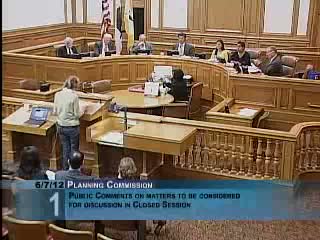
The San Francisco Planning Commission on June 7 held a special hearing to take public comment on legal issues related to 1601 Larkin Street and then voted unanimously to meet in closed session with legal counsel.
During public comment, Melanie Grossman read a letter from the Coalition for San Francisco Neighborhoods urging strict enforcement of historic-preservation laws and the California Environmental Quality Act and suggesting the site be reused for low-cost senior housing and community space. "We believe in making sure that seniors can remain in San Francisco as they age," Grossman said.
Linda Chapman of CS at Bend told the commission she was concerned developers could "progressively demolish" historic fabric to create evidence of deterioration and said that would defeat CEQA. Chapman also referenced a statute she called "Ralupa" or "reloopa," saying it covers religious activities and — in her view — did not apply to a commercial transaction being discussed. "Be careful," she told the commission, urging them not to approve a settlement that would erase landmark qualities of the building.
After public comment, Commissioner Ron Miguel moved that the commission go into closed session to consult with legal counsel on the matter. The motion was seconded. In a roll-call vote the chair announced the motion carried unanimously and the room was cleared for closed deliberations.
Following the closed session, the commission reconvened and voted unanimously not to disclose any portion of the closed-session discussion. The chair confirmed there would be no report on actions taken during the closed session. The special meeting then adjourned; the regular hearing was scheduled to begin at 1 p.m.
The public commenters urged preservation and careful application of CEQA; the commission's formal actions consisted of authorizing a private attorney–client conference and deciding not to disclose the closed deliberations. The transcript does not record any further substantive, public decisions on the underlying project at 1601 Larkin.
Next steps: The commission did not disclose the closed-session discussion and offered no public report on any action taken there.