Get Full Government Meeting Transcripts, Videos, & Alerts Forever!
Get email alerts on the Transportation topic
No spam. Unsubscribe anytime.
Board upholds Historic Preservation Commission—s Van Ness BRT certificate, rejecting appeal 3‑1
Summary
The Board of Appeals voted 3‑1 to deny an appeal of the Historic Preservation Commission—s Certificate of Appropriateness for the Van Ness (Venice) Bus Rapid Transit project, concluding most trolley poles are structurally compromised and that tree removals will be mitigated by new plantings.
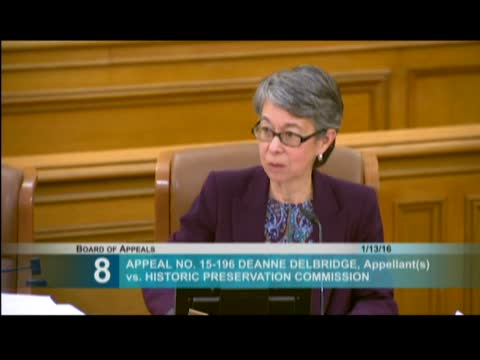
The San Francisco Board of Appeals on Jan. 13 denied an appeal of the Historic Preservation Commission—s Certificate of Appropriateness (COA) for the Van Ness (Venice) Bus Rapid Transit project, upholding the Commission—s determination by a 3‑1 vote.
Appellant DeAnne Delbridge sought a continuance and urged preservation of the Civic Center—s historic lampposts/trolley poles and median trees, calling for further study and alternative treatments to retain more historic fabric. Delbridge requested time to present lighting solutions and proposals for preserving additional poles and trees.
SFMTA project manager Peter Gabancho told the board the BRT project will improve transit reliability by adding dedicated center lanes and boarding islands and will include major utility upgrades. He said project staff found most existing concrete trolley poles to be in poor condition, structurally compromised in places (concrete spalling), and not meeting modern safety and lighting standards; the project proposes to remove most poles but retain and develop a separate treatment for four prominent trolley‑pole features near City Hall and the War Memorial Court. Gabancho also provided tree figures: he said 13 median trees are in the Civic Center district, nine would be removed for construction, and the project will plant 32 new trees yielding a net of 36 trees at project completion.
Planning preservation staff (Shelly Caltagironi) summarized the Historic Preservation Commission—s analysis: preservation consultants and staff studied pole condition and alternatives and concluded retaining all poles was technically and economically unfeasible; the Commission therefore approved removal of most poles while keeping four in place and asked for a separate COA for their long‑term treatment. The Commission also found that replacement of most median trees with similar species and an overall increase in median trees would preserve the district—s character consistent with Secretary of the Interior rehabilitation standards.
Public comment was extensive and split: transit‑rider groups and neighborhood stakeholders supporting the BRT stressed improved transit reliability and pedestrian safety, while other residents and preservation advocates urged the board to require further review or alternatives to preserve more trees and historic pole features.
In deliberation, Commissioner Fung moved to deny the appeal and uphold the Commission—s COA on environmental and historic‑resource grounds; President Anne Lazarus and Commissioner Rick Swig voted in favor, Vice President Daryl Honda opposed, and the motion carried 3‑1.
The board—s action preserves the HPC—s approach: most poles will be removed with a plan to retain and treat four central poles separately, while the project proceeds with tree replacement and wider corridor upgrades. The record shows the Board relied on the HPC—s environmental findings and staff analyses that structural, safety and technical constraints limit retention of the majority of the century‑old poles.