Get Full Government Meeting Transcripts, Videos, & Alerts Forever!
Get email alerts on the Childcare 501 Connecticut topic
No spam. Unsubscribe anytime.
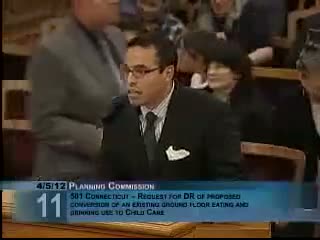
Planning commission approves change of use for 501 Connecticut despite merchants’ objections
Summary
After more than two hours of public testimony from Potrero Hill merchants and neighborhood residents, the Planning Commission voted 6–1 to approve a change of use at 501 Connecticut Street from a retail/eating establishment to a childcare center, finding the use is principally permitted and noting state licensing and building‑code checks will follow.
The San Francisco Planning Commission voted to allow a proposed childcare center at 501 Connecticut Street to proceed, rejecting a petition by neighborhood merchants seeking discretionary review.
Diego Sanchez of the planning department described the application as a change of use from an eating and drinking establishment to a childcare facility under planning code provisions. Staff recommended not taking discretionary review and approving the proposal, saying the use is principally permitted in the NC2 zoning district and that the site meets applicable policies and code requirements.
Opponents, led by the Potrero Dogpatch Merchants Association and owners of the Good Life Grocery, urged the commission to grant discretionary review. Merchants argued the corner location is an “anchor” retail site for Twentieth Street and said converting the space would reduce daytime foot traffic, eliminate potential jobs (they estimated a small grocery or deli could employ 15–20 people versus the proposed center’s 2–6 jobs) and accelerate vacancy in an already fragile two‑block commercial corridor. Keith Goldstein of PDMA said, “This is a prime location for a thriving retail business, and I fear its use as a childcare facility will only add to the demise of Twentieth Street.”
Proponents, including the applicant Kimberly Hughes and operators of “Little Link,” said the center would address an acute local shortage of nearby childcare and keep families in the neighborhood. Hughes told the commission that the outdoor play area measures about 420 square feet, that the state licensing inspector indicated the project would be given priority in the licensing queue once the change of use is approved, and that the applicant has petitions and letters of support from residents and families (the sponsor cited more than 130 petition signatures and 36 letters). Teacher and assistant director Matt Gebard said families would walk to the center and that childcare users are more likely than not to patronize nearby merchants.
During deliberations commissioners wrestled with competing priorities: the first‑priority policy favoring neighborhood‑serving retail versus the fact that childcare is a principally permitted use in the district. Several commissioners said they were sympathetic to merchants’ concerns about foot traffic. Commissioner Miguel voted against the recommendation, arguing that the site’s retail history and the small scale of Twentieth Street warrant greater protection. But a majority concluded that, because childcare is allowed by right, the Planning Commission could not overturn it under the discretionary‑review standard.
The motion to not take discretionary review and approve the project carried 6–1, with Commissioner Miguel dissenting. Commissioners and staff noted that state licensing, building permits and Department of Building Inspection oversight remain required before the center may open, and that any outstanding questions about safety, ventilation or outdoor space dimensions will be addressed during those reviews.
The commission’s action allows the applicant to proceed to the next stages of permitting; opponents may pursue appeals or other administrative remedies available under city law.