Get Full Government Meeting Transcripts, Videos, & Alerts Forever!
Get email alerts on the Housing Rhna topic
No spam. Unsubscribe anytime.
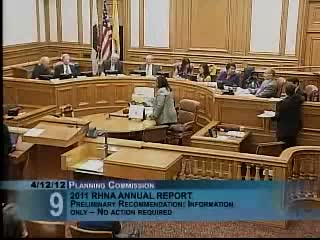
Planning staff reports San Francisco trailing RHNA targets for affordable units
Summary
Teresa Ojeda told the Planning Commission San Francisco must produce roughly 31,200 units in the current RHNA cycle, with a mandate that 60% be affordable; the city has fallen short so far on low- and moderate-income production and will rely on a large pipeline and new funding ideas to close the gap.
Teresa Ojeda, manager of the information and analysis group in the citywide policy planning unit, told the San Francisco Planning Commission that the city faces a steep task to meet Regional Housing Needs Allocation targets for the current reporting period.
Ojeda said the city’s 7.5-year share is about 31,200 housing units, roughly 60 percent of which must be affordable to households ranging from moderate to very low incomes. From 2007 through December 2011, San Francisco completed about 12,326 units and roughly 4,500 of those were affordable, a production rate well below the 60 percent affordability goal the RHNA process requires.
“We have a significant shortfall in production of units affordable to low and moderate income households,” Ojeda said, noting that large pipeline projects — including Treasure Island, Hunters Point and Park Merced — account for about 28,000 units in the city’s pipeline but are not expected to deliver most homes within the current reporting period. She estimated roughly 6,300 units could be completed by the end of the reporting cycle, about 27 percent of the pipeline and roughly 30 percent affordable if current assumptions hold.
Commissioners asked planning staff for more granular comparisons to other Bay Area jurisdictions and for better reporting tools. Commissioner Miguel and others urged staff to provide a dashboard-style breakdown in project case reports so commissioners and the public can see how specific proposals move the city toward RHNA obligations. Ojeda said the planning department intends to resume quarterly pipeline reporting and to incorporate more dashboard data into case reports and the annual housing inventory.
The presentation also prompted policy questions about replacing redevelopment-era tax increment financing. Ojeda said the mayor’s housing trust fund and other alternatives are under discussion to make up funding lost when redevelopment agencies were dissolved; those proposals were expected to be advanced for further review in the coming weeks.
The commission did not take final action on policy changes during the meeting; the session concluded with requests for the department to return with comparative data and with a clearer explanation of how pipeline and inclusionary programs are counted in RHNA reporting.