Get Full Government Meeting Transcripts, Videos, & Alerts Forever!
Get email alerts on the Land Use Variance topic
No spam. Unsubscribe anytime.
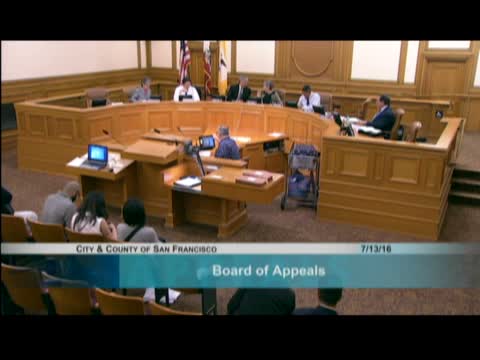
Board continues Broderick Street variance while urging mediation between neighbors
Summary
The Board of Appeals continued a rear‑yard variance appeal at 2941 Broderick Street to allow the owner and neighbors to meet with the Zoning Administrator to seek a settlement that preserves mid‑block open space and improves light and air impacts.
The San Francisco Board of Appeals continued an appeal of a rear‑yard variance for 2941 Broderick Street after neighbors and the owner failed to reach agreement. Appellants — including Phoebe Schreiber and Margaret Ruxton — said the proposed two‑story addition would further reduce mid‑block open space, block light and air and worsen an already out‑of‑scale structure. Owner Reza Ansari and architect Harvey Hacker said they reduced the project after meetings with neighbors and believe a modest variance is justified to stabilize and modernize an older, nonconforming building.
Planning staff described the lot as a relatively short RH‑2 parcel with constrained buildable envelope; the Zoning Administrator had urged further neighbor outreach and the owner subsequently revised plans to pull back portions of the proposed infill. Commissioners said they were sympathetic to efforts to find a negotiated compromise and asked the parties to meet with the Zoning Administrator or a designated representative to focus on reducing the addition’s projection into the shared mid‑block open area and improving southwest sightlines.
The board continued the matter to 08/24/2016 (later adjusted in the transcript to 08/24/2016 and scheduling options discussed) to allow additional mediation. If parties reach a settlement, appellants may withdraw the appeal or request that the board condition a future approval to reflect negotiated mitigation.
Why it matters: The appeal raises recurring tensions in San Francisco about legalizing nonconforming features, preserving neighborhood open space and using variance authority when earlier code violations exist. The board sought to encourage negotiated resolutions rather than a contested decision that could further divide neighbors.