Get Full Government Meeting Transcripts, Videos, & Alerts Forever!
Get email alerts on the Cultural Infrastructure topic
No spam. Unsubscribe anytime.
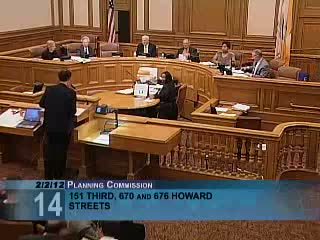
Planning Commission approves SFMOMA expansion design and exceptions, citing added public access and enlivened streets
Summary
The commission approved Snohetta’s terraced glass addition to SFMOMA and granted exceptions (bulk/wind) and forthcoming loading variances, after staff said the project would not increase net wind exceedances or substantially alter ground‑level comfort and that the project preserves important views and public access. Supporters highlighted cultural and tourism benefits.
The Planning Commission approved SFMOMA’s proposed expansion and the requested Planning Code exceptions, following a lengthy presentation by the museum and architect Snohetta and robust public support from cultural organizations and travel industry representatives.
Staff framed the exceptions as program‑driven: the museum needs large, contiguous gallery floor plates that make strict compliance with numeric bulk limits difficult on a narrow, mid‑block site. Planning’s analysis found the project’s massing — terraced floor plates that step back and reduce apparent bulk — and the proposed materials would limit visual impacts on immediate neighbors and preserve key views, including those of the historic Pacific Telephone & Telegraph (Pflueger) building.
The project requested an exception under Planning Code section 148 for wind comfort; staff concluded the expansion would not create a net increase in ground‑level comfort exceedances and would not materially change the number or duration of existing exceedances. Several loading variances (configuration/dimensions) will be heard separately by the zoning administrator as required by code.
SFMOMA Director Neil Benezra said the expansion is intended both to welcome more local and school visitors and to orient new entries to Natoma, Minna and Howard Streets; Snohetta principal Craig Dykers described terraced galleries, expanded lobbies, and new public‑facing pathways that open the museum to the neighborhood. The Commission also updated conditions to note the museum intends Richard Serra’s Sequenced Sculpture to satisfy the public‑art obligation unless project circumstances require the standard public‑art selection process.
Why this matters: commissioners framed the project as a major cultural investment expected to increase accessibility and revitalize nearby streets as Transbay redevelopment progresses. The vote followed broad support from preservationists for careful treatment of the original Botta building and from visitor‑economy advocates about tourism and local economic benefits.
Quote: “We firmly believe that through our expansion, we can become one of the great museums of modern and contemporary art anywhere in the world,” SFMOMA Director Neil Benezra said as he described the design’s public access benefits.
Next steps: zoning administrator hearings on loading variances; conditions and CEQA findings remain in place as the museum proceeds to permitting and project phasing.