Get Full Government Meeting Transcripts, Videos, & Alerts Forever!
Get email alerts on the Medical Cannabis topic
No spam. Unsubscribe anytime.
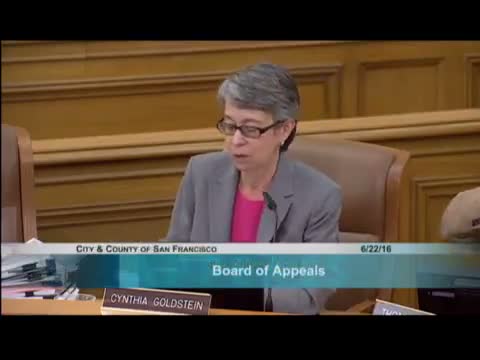
Permit for Lombard medical dispensary upheld after tied board vote
Summary
The Board of Appeals reviewed a contested permit for an Apothecarium dispensary at 2414 Lombard. After hours of testimony and a motion to revoke the permit that failed, the permit remained in place by operation of law; the Planning Commission had imposed conditions including no delivery and no sales to persons under 21.
A contentious hearing on June 22 ended with the San Francisco Board of Appeals effectively leaving intact a Planning Commission decision to permit a medical cannabis dispensary at 2414 Lombard Street. The board was unable to secure a majority to overturn the permit and, under the board’s procedures, the Planning Commission action stood.
The Cow Hollow Association and Larkin Street Youth Services led opposition, arguing the storefront sits directly across the street from Edward II, a supportive transitional‑age housing project for people ages 18–24, and is adjacent to a martial arts studio used by children. Opponents urged that the city‘s locational rules and the spirit of protections for vulnerable populations warranted denying the permit.
The permit holder, the Apothecarium, and dozens of supporters — including medical patients, clinicians and neighborhood merchants — told the board the business has a five‑year track record in the Castro and offered volunteer conditions to address neighborhood concerns, such as banning deliveries and restricting sales to those 21 and older. Planning staff confirmed the parcel met local locational criteria and explained that the Planning Commission had taken discretionary review and added conditions the sponsor had volunteered.
Commissioners debated the legal standard for overturning a local land‑use determination, whether transitional‑age housing should be treated as a protected facility for proximity rules, and whether an age restriction tied to business licensing would be legally defensible. A motion to deny the permit and revoke the planning approval was moved but failed to win a majority; the meeting record shows the board vote ended in a tie or deadlock, and the permit remained in effect by operation of law.
What happens next: The Planning Commission’s conditions remain in force. Opponents retain administrative remedies including rehearing requests and potential compliance or enforcement monitoring by Planning and Public Health.