Get Full Government Meeting Transcripts, Videos, & Alerts Forever!
Get email alerts on the Transportation Regulation topic
No spam. Unsubscribe anytime.
Board upholds SFMTA revocation of Gold Star Taxi color‑scheme permit, 4‑1
Summary
After hearing testimony from SFMTA and Gold Star Taxi’s counsel, the San Francisco Board of Appeals denied Gold Star’s appeal and upheld the SFMTA revocation of the company’s color-scheme permit by a 4‑1 vote, citing vehicle-inspection and safety compliance concerns.
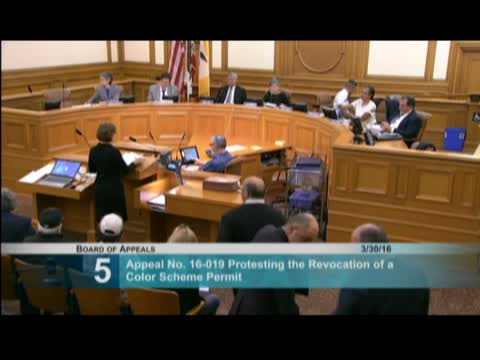
The San Francisco Board of Appeals on March 30 upheld the Municipal Transportation Agency’s revocation of Gold Star Taxi’s color-scheme permit, denying the company’s appeal 4‑1.
Heidi Machin, counsel for Gold Star Taxi, urged the board to reject what she called an onslaught of administrative citations and new allegations, arguing that many citations were legal technicalities, that some fines were reduced by a hearing officer, and that the company had invested in compliance and management changes. "Gold Star has been in business for 14 years," Machin said, asking the board to consider sustained findings rather than newly raised allegations.
Jarvis Murray, Enforcement and Legal Affairs Manager for SFMTA, told the board that Gold Star had recurring problems including vehicles that failed inspection or did not present for inspection, vehicles that reportedly operated while out of compliance, and chronic communication and dispatch problems. Murray said one vehicle failed inspection and remained in service for months, and that airport (SFO) personnel had identified safety concerns on at least one vehicle. "That is a safety issue," Murray said, describing the department’s decision to pursue revocation after repeated enforcement efforts.
Commissioners questioned details including why some citations were dismissed or reduced, the department’s use of evidence such as Yelp for identifying contact numbers, and whether intermediate sanctions such as suspension or conditional remedies were available and enforceable. SFMTA staff explained that some of the hearing officer’s decisions reduced fines because the department’s prior interpretation of per‑day fines was inconsistent with the hearing officer’s ruling, while other safety-related citations remained in place.
After deliberations, the board voted to deny the appeal and uphold the revocation. The motion carried 4‑1; President Honda cast the lone no vote. The board did not set a suspension or conditional probation alternative on the record during the March 30 decision.