Get Full Government Meeting Transcripts, Videos, & Alerts Forever!
Get email alerts on the Planning Code Omnibus topic
No spam. Unsubscribe anytime.
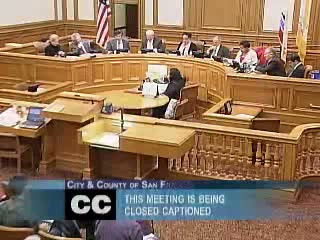
San Francisco planning commissioners continue review of large planning-code omnibus amid outreach, parking and Chinatown concerns
Summary
The Planning Commission on an extended hearing continued a broad package of planning-code amendments introduced by Supervisor David Chu to Feb. 9 after staff and the supervisor's office said more outreach and technical clarifications were needed; public comment raised concerns about parking grandfathering, proposed rate controls and Chinatown outreach.
The San Francisco Planning Commission on Feb. 9 (date of next hearing not yet finalized in the record) continued consideration of an omnibus set of planning-code amendments introduced from Supervisor David Chu's office, after robust public comment and staff requests for more outreach and technical fixes.
Justin True, representing Supervisor David Chu's office (District 3), told the commission that the sponsor and staff have held multiple meetings with stakeholders but that "there is more outreach needed," and asked the commission to continue the item "one more time" to late January or early February so opponents and affected parties can be consulted further.
The package includes dozens of changes across the planning code, with staff grouping recommendations into clerical fixes, parking changes, clarifications, limited corner commercial uses (LCUs/LCCUs), port and waterfront provisions, and other items. Planning Department staff told the commission they had added two amendments: a clerical correction and a clarified code citation that fixes an incorrect section reference.
Major policy elements that drew public comment include:
- Parking controls: Staff said the ordinance as drafted would prohibit surface parking lots in the C2 district; the department instead recommended allowing surface lots under conditional use so existing lots can continue to operate, and extending temporary-use renewals for nonconforming C3 lots from two years to five. The Planning Department also proposed moving a long-term parking rate structure into transportation code and suggested a grandfathering clause for projects that already have conditional-use approvals.
- Affordable-housing FAR incentives: The proposal would exempt affordable housing units from floor-area-ratio (FAR) limits to enable more on-site inclusionary units. Developers and housing advocates — including Mark Babson of Emerald Fund and Tim Cohen of the San Francisco Housing Action Coalition — said they supported FAR relief as an incentive to provide on-site below-market-rate units instead of paying in-lieu fees.
- LCUs/LCCUs and signage: Staff recommended maintaining existing size and corner-distance controls for limited corner commercial uses and requested careful treatment of sign and illumination rules, especially where scenic-street or waterfront rules could affect events.
- Port properties and WDAC: Staff recommended expanding the Waterfront Design Advisory Committee's (WDAC) review to all port properties, allowing the WDAC to advise on waterside curb cuts and design issues while keeping key port conditional-use language that the port said reaffirms obligations under the Burton Act.
Public commenters were divided. Andy Thornley of the San Francisco Bicycle Coalition offered "very strong support for this ordinance," praising requirements that would make it easier to require bike parking and mitigate excess vehicle parking impacts. By contrast, representatives of parking operators and associations warned that changes could force longstanding legal surface parking lots to seek expensive, repeated conditional-use reviews and cautioned that proposed rate rules could sharply raise monthly parking costs; Caroline Guibert and Ron Bridal urged retaining existing grandfathering or lengthening the conditional-use period for temporary authorizations.
Community groups raised outreach and equity concerns. Tan Chao of the Chinatown Community Development Center said Chinatown residents and small-business owners were "blindsided" and criticized perceived lack of Chinese-language outreach, calling attention to provisions such as bans on plastic awnings and rooftop screening requirements that may disproportionately affect Chinatown storefronts. Peter Cohen of the Council of Community Housing Organizations urged separating some policy areas for fuller review, noting the package bundles many distinct code changes.
Commissioners asked technical questions and raised procedural concerns: Commissioner Mike Antonini pressed staff on whether surface parking would be grandfathered or required to seek conditional-use approval every five years; Planning staff clarified the distinction between treatment in C2 (conditional use) and C3 (nonconforming with five-year temporary-use renewals). Staff member Scott Sanchez explained that the proposed administrative relief under planning-code section 307h would adapt an existing administrative process (used in historic-district Article 10 cases) to certain Article 11 buildings, apply only when there is no expansion, and would retain public-notice and appeal rights.
Several commissioners recommended additional outreach, especially to Chinatown and waterfront stakeholders, and suggested the sponsor consider breaking the omnibus into smaller pieces to allow more focused review. Supervisor Chu's office (Judson True) confirmed outreach had been underway since May and said the office would continue stakeholder meetings and could consider pulling out particular elements for separate vetting.
On a motion by Commissioner Antonini, seconded in the record, the commission voted by roll call to continue both agenda items to February 9; the clerk recorded Aye votes from Commissioner Antonini, Commissioner Board, Commissioner Phan, Commissioner Moore, Commissioner Seguaya, Commissioner Miguel and President Olague. The chair announced the hearing continued to Feb. 9 and that the public hearing would remain open.
The commission's continuation keeps the public record open and gives staff and the sponsor time to refine code citations, consider targeted outreach (including language and neighborhood-specific meetings), and address technical questions about parking rates, grandfathering and the interplay between local incentives and state law.