Get Full Government Meeting Transcripts, Videos, & Alerts Forever!
Get email alerts on the Formula Retail topic
No spam. Unsubscribe anytime.
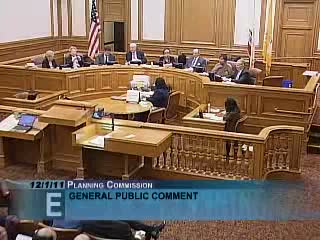
San Francisco Planning Commission denies Sherwin Williams conditional-use request for Polk Street
Summary
After hours of testimony from local merchants and residents, the Planning Commission voted 4–3 to disapprove Sherwin Williams’ request to open a formula retail paint store at 1529 Polk Street, citing concerns about impacts on independent Polk Street businesses and the formula-retail analysis used for the neighborhood.
The San Francisco Planning Commission voted 4–3 on Dec. 1 to deny a conditional-use authorization sought by Sherwin Williams to occupy 1529 Polk Street.
Planning staff presented the application as a request under the formula-retail rules (planning code sections 303, 703.3(b) and 703.4) to allow the national paint retailer to operate in a long-vacant storefront in the Polk Street neighborhood commercial district. Department staff said the project would activate a space vacant since 2008 and noted proposed storefront transparency and conditions intended to preserve neighborhood character.
Andrew Junius, representing the applicant, told commissioners the company hoped to “find a tenant that can go there and clean up this space.” Gary Garcia, Sherwin Williams’ district manager, described products and contractor services the store would offer and argued the chain would fill an identified retail gap.
More than a dozen Polk Street merchants and neighborhood business leaders spoke against the proposal. Rick Karp, president of Cole Hardware, argued the city’s formula-retail analysis understated the corridor’s true trading area and warned that a national chain would “basically [be] trying to take money out of San Francisco.” Steven Cornell of long‑standing Brownies Hardware said the proposal risked harming the many small independent merchants who sell paint and related supplies along Polk Street.
Commissioners debated competing policy goals: activating a longstanding vacancy and increasing access to services versus protecting locally owned businesses and the unique character of the Polk Street commercial district. Several commissioners cited the narrow geographic subsection of the neighborhood used in staff’s formula-retail survey as a contentious point raised in public testimony.
Commissioner Moore moved to disapprove. On the roll call the motion passed 4–3. The clerk announced the motion passed on a 4 to 3 vote; the transcript records the outcome and names the dissenting vote on the motion as recorded in the meeting minutes. No subsequent motion to rehear the item was made that day.
What happens next: This Planning Commission action was on the conditional-use item before the commission; further appeals or related actions (if pursued) would be played out following city procedures for land use appeals and any additional filings.
Votes at a glance: Motion to disapprove Sherwin Williams application for 1529 Polk Street — Outcome: approved (4–3).
The Planning Commission moved on after the vote to other agenda business.