Get Full Government Meeting Transcripts, Videos, & Alerts Forever!
Get email alerts on the Community Planning topic
No spam. Unsubscribe anytime.
Japantown organizers present revised neighborhood plan urging no general height increases and exploring a commercial community land trust
Summary
Community organizing committee and planning staff presented revised Japantown recommendations including no general height increases, a Japantown neighborhood commercial district, protections for cultural heritage, parking and design standards, and exploratory work on a commercial community land trust funded by grants.
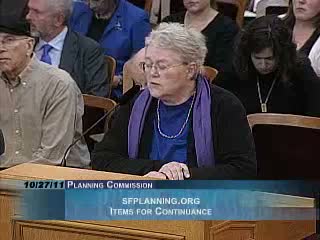
Planning staff and Japan Town community representatives presented an updated Japantown Better Neighborhoods plan to the Planning Commission on Oct. 27, emphasizing preservation of neighborhood character and a set of implementation tools intended to sustain Japantown’s cultural and commercial identity.
Paul Lord, Planning Department project lead, reviewed the community engagement process, support grants (Ford Foundation, Friends of City Planning) and technical work undertaken since 2009. Community co-chairs Karen Kai (Land Use & Built Form) and Bob Hamaguchi (Cultural Heritage/Economic Development) presented committee recommendations.
Key elements included: recommending no general increase in building heights and limiting proposed tower-scale increases that community members said would harm Japantown’s character; creation of a tailored neighborhood commercial district (NCD) with updated design standards; an emphasis on residential density calibrated with unit-mix requirements and parking rules (proposed 3 spaces per 4 residential units with 1:1 allowed on a conditional basis); deletion of a proposed Webster Street linear park due to funding and siting concerns; and the community’s exploration of a commercial community land trust (CLT) to enable community ownership of key properties such as the Japan Center malls.
Speakers from the organizing committee and many neighborhood stakeholders expressed broad support for protecting social heritage, recommended stronger public realm and sustainability measures (rooftop solar/urban agriculture ideas), and urged careful public engagement and an environmental review timetable. Commissioners generally praised the depth of community work and recommended more detailed implementation steps, including feasibility analysis of CLT governance and finance.
Next steps: staff will repackage the community recommendations into a new planning document, refine design standards and NCD language, complete background analyses (including shadow studies) and propose an environmental review timeline for next fiscal year; staff estimated a possible environmental review start within the coming budget cycle and possible return with final documents in late 2012.