Get Full Government Meeting Transcripts, Videos, & Alerts Forever!
Get email alerts on the Zoning Variances topic
No spam. Unsubscribe anytime.
Board upholds variances to legalize dozens of live-work and dwelling units
Summary
The Board of Appeals upheld zoning variances that will legalize additional dwellings at several Essex properties (Brannon Street and Pennsylvania Avenue), after debate over illegal unit creation, enforcement and rent-control implications.
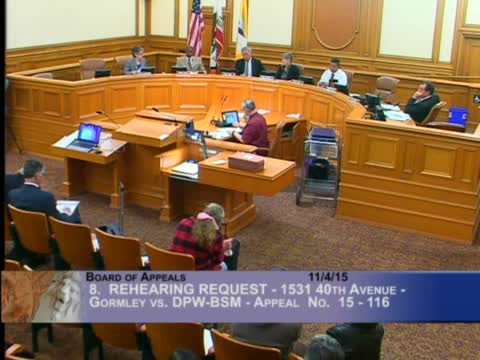
The San Francisco Board of Appeals voted on Nov. 4 to deny appeals and uphold zoning variances that will legalize additional dwelling units and preserve live-work unit status at multi-building Essex projects on Brannon Street and Pennsylvania Avenue.
Alan Murphy, counsel for the project sponsor, summarized unit counts and said the variances would legalize existing units that were created after the original approvals. Planning Department Zoning Administrator Scott Sanchez described the department’s approach: the variances allow legalization of dwelling units to prevent displacement through eviction and include conditions and compliance plans so the sponsor must demonstrate adherence to required standards.
Appellants argued the projects contained illegally created residential units, raised concerns about past enforcement and asked whether penalties or remedies (including rent-control status and condo mapping) would follow. Commissioners pressed staff and the sponsor on unit counts, whether open-space requirements could be met on roofs, and the possibility of remapping the properties if legalized units change the condo footprint.
Planning staff said legalization will require conditions: a compliance plan, potential impact fees and affordable-housing obligations where applicable. The Board applied the five findings required under Planning Code section 305(c) and moved to deny the appeals; the motion to uphold the variances carried on recorded votes.
The decisions allow the sponsor to proceed with plans to bring units into compliance under conditions set by planning staff. The Board’s action does not immediately resolve potential enforcement for prior illegal construction; staff said enforcement avenues (including notice of violation processes) remain available and that some prior enforcement steps involving an engineer had been taken previously.
The Board recorded the motion to deny the appeals and upheld the variances.