Get Full Government Meeting Transcripts, Videos, & Alerts Forever!
Get email alerts on the Rooftop Cu 2516 Mission topic
No spam. Unsubscribe anytime.
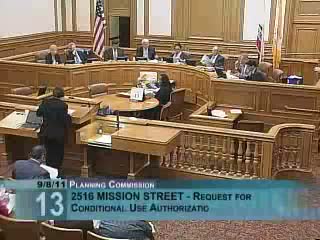
Planning Commission Approves Rooftop Outdoor Area at 2516 Mission Street with Noise and Occupancy Limits
Summary
After hours of testimony from neighborhood groups and supporters, the commission approved a conditional use permit to legalize a rooftop outdoor activity area at 2516 Mission Street (Medjool/Majoul) with reduced outdoor occupancy, mandatory neighbor contact, and a six‑month compliance review.
The San Francisco Planning Commission voted 5–1 to approve a conditional use authorization that legalizes a rooftop outdoor activity area at 2516 Mission Street and imposes additional conditions intended to limit noise and improve enforcement.
Planning staff told the commission that the project sponsor had reduced the rooftop dining area to about 2,477 square feet, installed acoustical mitigation, and submitted a sound study concluding noise impacts would be less than significant under the city’s noise rules; staff recommended approval with standard outdoor-activity conditions (Planning staff Kimberly Duranday). The staff report also noted a mix of nine written oppositions (predominantly from the San Francisco Buddhist Center) and eight letters of support (SEG 2715–2821).
Victor Marquez, counsel for the project sponsor, said the restaurant is a long‑standing local business that employs neighborhood residents and that management had worked with staff to add sound barriers and other mitigations; he asked the commission to approve the conditional use so the business could continue operating without legal uncertainty (Victor Marquez). Opponents, led by the San Francisco Buddhist Center’s Viveka Chen and other neighbors, argued the rooftop had previously operated in a way that generated substantial noise complaints and police calls and that the commission should deny the permit or impose strict, enforceable limits (Viveka Chen; neighbors’ testimony).
Commissioners spent more than an hour on detailed questions about the zoning code, how outdoor activity areas are defined in neighborhood commercial transit (NCT) districts, whether rooftop accessory uses are permitted above the second story, plumbing and egress for the rooftop, and how kitchens and beverage service would be operated (staff and zoning administrator comments). Staff explained the code allows outdoor activity areas as conditionally permitted uses when they are not located at the front property line; the zoning administrator summarized the enforcement and appeal history that brought the matter to the commission (planning/zoning staff).
After extended public comment (more than 60 speakers for and against), the commission amended the staff recommendation with neighbor-focused measures. The final approval includes: a lowered maximum outdoor occupancy for the rooftop dining area (the commission reduced the applicant’s proposed maximum to 175 people for the outdoor area); a requirement that the owner appoint a community liaison, post evening phone contact information for neighbors and respond on-site to complaints while the rooftop is operating; visible signage asking patrons to limit noise; staffing and security conditions to maintain quiet and order; a prohibition on live music or other entertainment beyond low-level background music; and a mandatory six‑month review of the conditional use to assess compliance and acoustic effects. The motion passed 5–1, with Commissioner Moore voting no (SEG 6171–6184).
The commission’s approval does not remove other review steps the project must complete, including any actions required by building or fire code reviewers. Staff and the project sponsor said they will continue to work with neighborhood representatives on the final roof‑deck layout, the precise location and design of any physical separators between required residential open space and the outdoor activity area, and the final acoustical monitoring/enforcement implementation (planning staff and project counsel). The commission also asked staff to provide an informational memo to commissioners once final construction plans and enforcement details are in place and to return for a formal six‑month compliance review.
What’s next: the conditional use permit is effective as granted by the commission; building‑and‑fire‑code plan review and any required permits remain the responsibility of the Department of Building Inspection and Fire Department. The commission recorded conditions intended to make neighborhood communication and enforcement explicit and scheduled the item for a six‑month review to verify compliance and reassess noise impacts.