Get Full Government Meeting Transcripts, Videos, & Alerts Forever!
Get email alerts on the Wireless Siting topic
No spam. Unsubscribe anytime.
Commission approves AT&T proposal in Visitation Valley after months of outreach and heavy public opposition
Summary
The Planning Commission approved AT&T's conditional use permit for nine panel antennas at 199 Leland Ave amid strong neighborhood opposition, concerns about outreach and health, and debate over alternative locations; approval included standard conditions and offers for post‑installation RF readings.
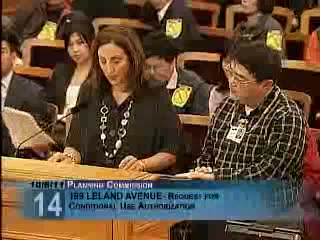
The Planning Commission on Oct. 6 approved AT&T's request to install nine panel antennas and associated equipment at 199 Leland Avenue after lengthy public testimony and commission discussion about outreach, alternatives and health monitoring.
AT&T representatives (Teddy Berheus, Tony Kim) described a technical coverage gap in the District 10/Visitation Valley area and recounted two community meetings and outreach efforts including a bilingual meeting and a booth at the Leland Avenue Fair. AT&T said it evaluated 13 sites and could not find an alternative that met the radio‑coverage needs; the company said the Recology/Tunnel Avenue site was considered but does not adequately cover the gap.
Residents and community groups, including Marlene Tran speaking for the Visitation Valley Asian Alliance, said they opposed the installation and produced petitions and signatures (speakers referenced more than 1,400 signatures). Testimony raised concerns about health, battery storage in garages, adequacy of bilingual outreach and whether the site would in fact serve Highway 101 and 280 corridor needs. "This proposal has hit our community very hard and there has been overwhelming opposition with over 1,400 signatures," Marlene Tran said.
Commissioners discussed federal limitations on basing denials on RF emissions if proposed emissions are below federal thresholds and emphasized the importance of thorough community outreach in multiple languages. AT&T committed to post‑installation RF testing and to provide reports to the Department of Public Health; staff noted AT&T would test the site after it was activated and every two years thereafter.
After questions about alternative sites and technical justification, a motion to approve the project with standard conditions carried on a unanimous roll call. The commission directed staff and the company to continue outreach and to facilitate RF testing requests from residents.