Get Full Government Meeting Transcripts, Videos, & Alerts Forever!
Get email alerts on the Urban Forestry topic
No spam. Unsubscribe anytime.
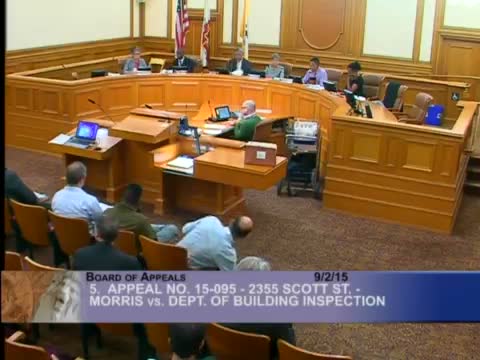
Board upholds DPW tree-removal permit for Masonic Streetscape after extensive public comment
Summary
After hours of testimony, the Board of Appeals on Sept. 2 denied an appeal of a Department of Public Works order to remove and replace street trees along Masonic Avenue, finding the project’s safety and complete-streets objectives justified the removals while requiring environmental findings; vote was 4-0.
The Board of Appeals voted 4–0 on Sept. 2 to deny an appeal of a Department of Public Works order authorizing removal and replacement of street trees for the Masonic Streetscape Improvement Project.
Project manager John Dennis and DPW staff framed the work as a "complete streets" safety overhaul: narrower travel lanes, protected bicycle facilities, widened sidewalks and a planted median. Dennis told the board the project proposes removing 49 trees (DPW materials included both 44 and 49 counts at different points) and planting 185 new trees, for a corridor total of 282 trees on completion — a net gain of 136.
Appellants and many neighbors urged preservation of mature trees and questioned outreach, transplant viability, pollinator habitat loss and the use of palm trees. "Preserve the 3 trees on Masonic public space... keep the present median from Geary to [Hoeferro]," appellant Curtis Speck said.
DPW and Urban Forestry staff said most sidewalk trees would be preserved, that some trees were in poor condition or conflict with the new grade and transit facilities, and that several ginkgo trees proposed for transplanting have a reasonable chance of survival but would be replanted with 36-inch box specimens if transplants failed.
Commissioners focused on notice/posting discrepancies (44 vs. 49 trees) and environmental findings under CEQA. The board adopted environmental findings referencing prior environmental review (2009 Bicycle Plan EIR and 2012 addenda) and concluded the permit and project scope were supportable. The motion to deny the appeal and uphold the permit carried 4–0.
The record shows the board acknowledged short-term loss of mature tree benefits but concluded long-term safety gains and a planned tree-planting program provided net ecosystem service benefits over time.