Get Full Government Meeting Transcripts, Videos, & Alerts Forever!
Get email alerts on the Housing Supportive Edwardii topic
No spam. Unsubscribe anytime.
Planning Commission upholds environmental review for Edward II youth housing after hours of testimony
Summary
The Planning Commission voted to uphold the Planning Department nalysis finding that a preliminary mitigated negative declaration (PMND) was adequate for the proposed conversion of the Edward II hotel at 3151 nd 3155 Scott Street into supportive group housing for transitional‑age youth. Opponents pressed for an EIR, citing notice, traffic and historic‑resource concerns; the Mayor nd project sponsors said federal funds were withdrawn so NEPA did not apply.
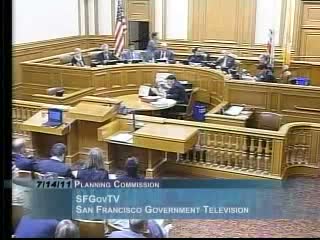
The San Francisco Planning Commission on July 14 upheld the Planning Department ecision that a preliminary mitigated negative declaration (PMND) was adequate for the proposed conversion of the Edward II hotel on Scott Street into affordable group housing for transitional‑age youth. After more than two hours of public testimony, including dozens of neighborhood residents and supporters from housing and youth services groups, the Commission voted to uphold the PMND 5–1.
Andrea Contreras of the Planning Department told the commission the department nalyzed the project—or potential CEQA impacts including historic resources, transportation, air quality, noise, seismicity and public services and concluded the project would not have significant environmental impacts requiring an Environmental Impact Report. Contreras said staff ccounted for the sponsor—stimate of 24 residents and limited overnight guest assumptions in the transportation analysis and that the project would not enlarge the building envelope.
Opponents, represented by attorney Steven Hammond and local neighbors, urged the Commission to order a full EIR, arguing the notice and public‑review period was inadequate and asserting the project had either used or contemplated federal money, which they said would have triggered a NEPA review. Charles S. Holden and other residents also argued the site adjoins a potential California Register‑eligible Pacific Heights/Cow Hollow historic district and asked that the State Office of Historic Preservation be given an opportunity to review the project.
Lydia Ealy of the Mayor nd Office of Housing directly addressed the funding question during public comment, saying the city had withdrawn proposed federal funds for acquisition and the project was being carried out using local funds so that a NEPA submittal to HUD was not required. Ealy said the city made that change to meet purchase deadlines and that references to NEPA in some materials reflected an earlier plan. That clarification was a focal point during commissioners—ollow‑up questions.
Supporters of the project included Community Housing Partnership (the project sponsor) and Larkin Street Youth Services, who described the proposed model of supportive housing and on‑site case management for transition‑age youth. Gail Gilman of Community Housing Partnership emphasized 24‑hour staffing, a live‑in manager, and property management practices intended to reduce neighborhood impacts. Numerous young people served by Larkin Street and nonprofit partners told the commission the project would offer stability, access to education and employment supports and reduce homelessness among 18‑ to 24‑year‑olds.
During deliberations commissioners pressed staff and the appellant to clarify two technical points: whether the site has direct ingress/egress to Highway 101 (planner Sarah Jones said it did not), and how the CEQA analysis treated overnight guests and the potential for double‑occupancy. Staff reiterated that the transportation analysis relied on the project sponsor escription of 25 residents at one time and that the sponsor said unit size limited double occupancy.
Commissioner Miguel moved to uphold the PMND; the motion carried 5–1 (Commissioner Antonini voted no). The Commission ction means the project proceeds to consideration of zoning, conditional use and the Special Use District (SUD) legislation that would allow the higher group‑housing density and waivers to rear‑yard and open‑space requirements.
What happens next
By upholding the PMND the Commission did not endorse final project entitlements; it kept the environmental finding in place so the Commission and other bodies can consider rezoning, SUD and conditional use requests. The department and sponsors said they would continue outreach with the neighborhood and continue refining design and management conditions that were discussed at the hearing.
Speakers: Andrea Contreras (Planning Department), Lydia Ealy (Mayor's Office of Housing), Steven Hammond (appellant's counsel), Gail Gilman (Community Housing Partnership), Sherilyn Adams (Larkin Street Youth Services), Charles S. Holden (neighbor).
Authorities referenced: California Environmental Quality Act (CEQA), PMND (preliminary mitigated negative declaration), State Office of Historic Preservation, NEPA/HUD (National Environmental Policy Act) as discussed by the Mayor nd Office of Housing.
Sources/provenance: Staff presentation and recommendations: SEG 131—Nd SEG 258; Appellant opening: SEG 264—ND SEG 329; Mayor's Office clarification on funds/NEPA: SEG 706—ND SEG 726; Commission deliberation and vote: SEG 903—ND SEG 1112.