Get Full Government Meeting Transcripts, Videos, & Alerts Forever!
Get email alerts on the Healthcare Cpmc topic
No spam. Unsubscribe anytime.
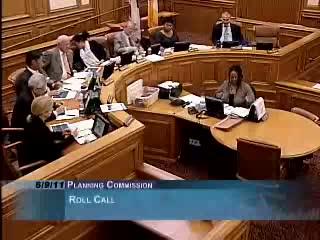
Planning commission hears mayor—s package for CPMC rebuild as neighbors and clinicians demand stronger safeguards
Summary
Planning staff presented the California Pacific Medical Center (CPMC) long-range development plan and the mayor—s development-agreement "asks" — including housing in-lieu payments, charity-care and Medi-Cal benchmarks, workforce commitments and transit funding. CPMC said the full package is unaffordable; dozens of Tenderloin residents, nurses and psychiatrists urged stronger enforceable community benefits, psychiatric beds and worker protections.
San Francisco—s Planning Commission spent the evening reviewing an extensive informational presentation on California Pacific Medical Center—s long-range development plan and the city—s draft list of conditions the mayor—s office wants included in a development agreement.
The presentation by planning staff and multiple city departments laid out the approvals CPMC will need for projects at Cathedral Hill (Van Ness and Geary), St. Luke—s (Cesar Chavez), Davies and the Pacific and California campuses. Staff also summarized the mayor—s May 16 request that CPMC commit to housing mitigation (an in-lieu fee and payments to replace displaced SRO/rent‑controlled units), charity‑care and Medi‑Cal performance at or above peer private hospitals, workforce‑and local‑hire targets, and transit and streetscape funding for impacted corridors.
Why it matters: CPMC proposes to build two new seismically upgraded hospitals and associated medical office space — work the city characterizes as essential for earthquake readiness but which would also change Van Ness and adjacent neighborhoods. The mayor—s package attempts to translate the project—s land‑use entitlements into a set of mitigation obligations that city staff say are tied to the project—s scale and impacts.
What the city asked for: Staff summarized the one‑time and ongoing elements the mayor—s office seeks in a development agreement: roughly $108 million in upfront public‑realm, transit and housing mitigation (staff—s current formulation), ongoing annual commitments tied chiefly to charity‑care and Medi‑Cal shortfalls, a $2 million commitment for workforce and training programs, requirements to build a medical office building at St. Luke—s within a multi‑year schedule, and performance benchmarks for local hiring and apprenticeship opportunities.
CPMC response: Warren Browner, chief executive officer for CPMC, told the commission the system is committed to rebuilding but called the scale of the city—s ongoing requests unrealistic over the long term. Browner said CPMC already provides substantial uncompensated and safety‑net care and warned that open‑ended obligations could jeopardize the project—s feasibility. He asked for flexibility in how city goals are met and suggested many points were still under active negotiation with the mayor—s team.
Health and neighborhood issues: Barbara Garcia, director of the Department of Public Health, described agreed items and outstanding public‑health asks staff want written into a development agreement: charity‑care and Medi‑Cal targets benchmarked to other private nonprofit hospitals, commitments to skilled‑nursing capacity and subacute care, centers of excellence to serve neighborhood health needs, and steps to protect long‑term viability of the St. Luke—s campus.
Transportation and transit mitigation: City transportation staff and the MTA outlined traffic and transit impacts on Van Ness, Geary and nearby intersections, and presented proposed mitigations including a $10 million contribution toward planned Van Ness and Geary Bus Rapid Transit (BRT) corridors, a modest per‑garage‑entry surcharge to offset transit operating costs, and employee Muni pass programs to reduce drive‑in trips. Staff stressed that the site sits on an already busy transit corridor and that reallocating curb space and adding transit priority were central to reducing long‑term impacts.
Public testimony: More than a hundred people addressed the commission during a lengthy public‑comment period. Neighbors directly adjacent to the St. Luke—s site urged stronger, enforceable neighborhood mitigation and said construction and long‑term traffic would seriously affect low‑rise housing immediately abutting the hospital footprint. Clinicians and community psychiatrists pressed the commission to require beds and on‑site psychiatric capacity tied to community needs; several psychiatrists said closures of inpatient units in prior years left the system unable to place high‑risk patients safely. Nurses, many speaking as union members, sought guaranteed transfer and job protections into any new facilities and urged that worker safeguards be part of any approval to assure patient safety and continuity of care. Tenderloin residents and community groups demanded a binding community benefits agreement that would ensure expanded charity care and clinic support, local hiring and housing mitigation.
Where it goes next: City staff said CPMC and mayoral representatives are continuing negotiations. Staff expects a draft development agreement and amended land‑use materials to be presented to the commission at the July 14 informational hearing, with certification of the final EIR and potential land‑use votes later in the summer. The commission reserved questions and asked city and hospital negotiators to report back with more detailed, enforceable language on charity‑care metrics, psychiatric capacity, workforce transfer guarantees and neighborhood mitigation.
The commission did not take a land‑use vote tonight; it treated the session as an informational hearing to gather testimony and reflect the wide range of public concerns and department recommendations. The hearing is scheduled to continue at future meetings as the city and CPMC seek a negotiated development agreement.