Get Full Government Meeting Transcripts, Videos, & Alerts Forever!
Get email alerts on the Medical Cannabis topic
No spam. Unsubscribe anytime.
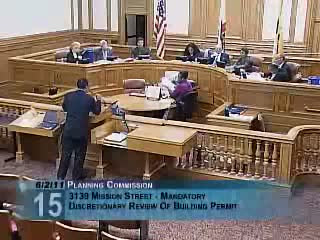
Planning Commission approves Mission Herbal Care dispensary after security commitments and outreach
Summary
After lengthy public testimony both supporting and opposing a proposed medical cannabis dispensary at 3139 Mission Street, the Planning Commission approved the discretionary review with conditions including continued coordination on the facility’s security plan with the Ingleside police.
San Francisco — The Planning Commission approved on June 2 a discretionary review for Mission Herbal Care, a proposed medical cannabis dispensary and associated storefront café and health services at 3139 Mission Street, with an added condition that the applicant work closely with the San Francisco Police Department (Ingleside Station) on the facility’s security plan.
Planning staff told the commission the proposal includes a 1,700‑square‑foot medical cannabis dispensary, a roughly 360‑square‑foot street‑level retail coffee storefront with separate entrances, no on‑site smoking or vaporizing, limited hours (closing no later than 9 p.m. as discussed in outreach), delivery service for immobile patients, and operational security measures (cameras, an entrance guard, and an enclosed garbage area). Staff recommended approval, noting the project meets planning-code proximity requirements and is categorically exempt from CEQA as a Class 1 or Class 3 project.
Project sponsor Dr. Dimitri Margasado described the operation as a "medical health care facility" that would pair medical cannabis distribution with chiropractic care, physical therapy and counseling, delivery for homebound patients, and other support services. "Here at Mission Herbal Care our goal is not to simply open a pot club but a safe health care facility providing low-cost health care services to our members," he said.
Public testimony was strongly divided. Supporters, including an outreach consultant and health-care professionals, praised the sponsor’s outreach and said the site’s transit access and storefront activation would benefit the corridor. Attorney Robert Raich told commissioners he considered the application one of the best medical cannabis proposals he had seen in the state.
Opponents — area residents and business owners — voiced concerns about neighborhood safety, clustering of dispensaries, outreach and notice, and proximity to childcare facilities. Officer William McCarthy of Ingleside Station told the commission the police became aware of the application only on May 23 and urged that the applicant work with the station on a security plan that included properly licensed security personnel and coordination with the department’s video‑forensics unit.
Commissioners discussed policy questions about the city’s 1,000‑foot proximity rule (which applies to primary and secondary schools, not to some child‑care centers under current Board of Supervisors ordinance language) and asked staff to note the broader issue of clustering and whether the supervisors should revisit the ordinance. In the hearing, planning staff confirmed the Family School cited by neighbors is classified as a child‑development center, not a primary or secondary school, and thus is not included in the code’s restricted uses list as written.
The commission’s approval included explicit direction that the project sponsor continue to work with Ingleside Station on finalizing the security plan and meet specified operational conditions (daily cleaning, odor control equipment, enclosed garbage, no on‑site smoking). The motion passed unanimously.
What’s next: The sponsor will finalize security details with SFPD and proceed to building‑permit review and related permitting; written comments on the project had been accepted during the discretionary-review process and enforcement staff will monitor compliance with conditions.