Get Full Government Meeting Transcripts, Videos, & Alerts Forever!
Get email alerts on the Telecommunications topic
No spam. Unsubscribe anytime.
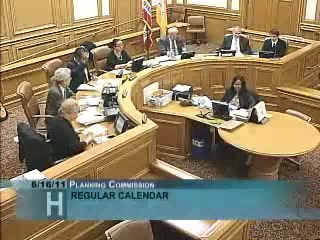
Planning Commission approves AT&T rooftop antennas at 274 Brannon with conditions to address abandoned gear and billboard illumination
Summary
Commission approved conditional use for AT&T rooftop antennas at a six‑story building in a historic district, finding compliance with public‑health radio‑frequency standards and requiring removal of abandoned antennas and staff follow‑up on billboard illumination concerns.
The Planning Commission on June 16 approved a conditional use authorization for AT&T to install panel antennas and related equipment on the rooftop of a six‑story building at 274 Brannon Street, subject to conditions requested by staff and neighbors.
Department staff told the Commission the rooftop site is a colocation location and lies within an Article 10 historic district; the project received a certificate of appropriateness from the Historic Preservation Commission. Staff also said the Department of Public Health reviewed the installation and determined it complies with current Federal Communications Commission safety standards for radio‑frequency exposure.
AT&T representatives Teddy Verhaiz and Tony Kim described outreach efforts, engineering work and aesthetic treatments. Neighbors asked for conditions to limit the height of steel towers and to require removal of dormant equipment; Mark Dragan, a condominium owner across the street, supported removal of abandoned antennas and asked that the operator reduce tower height where dormant elements are removed. Dragan also raised concerns about illumination from a large, nonconforming billboard at the site and asked that the Commission request restricted hours for illumination.
The Commission approved the project with a condition requiring the property owner or sponsor to remove antennas and equipment that have been out of service or abandoned for a continuous period of six months, and directed staff to contact the billboard operator to request information and explore reduced illumination hours as a neighborhood mitigation step. Commissioners clarified that the billboard ownership and lighting operate under a separate regulatory framework and that staff should pursue the illumination concern as a follow‑up rather than as a condition of the wireless permit.
Next steps: staff will finalize the conditional use permit with the stated conditions and notify the sign operator regarding illumination; the permit approval is subject to standard conditions and any subsequent appeal procedures.