Get Full Government Meeting Transcripts, Videos, & Alerts Forever!
Get email alerts on the Public Health Tobacco Control topic
No spam. Unsubscribe anytime.
San Francisco health officials say e‑cigarette sales to minors persist despite new law
Summary
City health staff told the Board of Appeals that San Francisco treats e‑cigarettes like cigarettes under local law and that decoy operations found about 1 in 5 retailers sold to minors; officials described outreach, inspections and penalties aimed at reducing youth access.
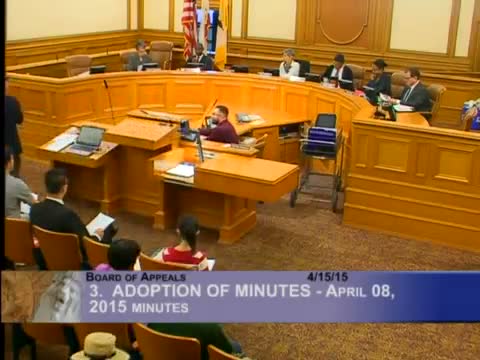
Derek Smith, a health educator with the San Francisco Department of Public Health’s Tobacco Free Project, told the Board of Appeals on April 15 that the city treats electronic cigarettes the same as conventional cigarettes under local law and is intensifying outreach and enforcement to keep the products out of young people’s hands. "The products are really exploding in popularity, especially among young people," Smith said, and the city has identified "over 500 known retailers" selling e‑cigarettes.
Smith said San Francisco’s March 2014 ordinance (Article 19N of the San Francisco Health Code, signed by Mayor Ed Lee) aligns local rules with state law and requires retailers to follow tobacco‑retailer licensing. He described annual mailings, multi‑language fact sheets, targeted merchant outreach and a public education campaign, and said translated materials were mailed in March and April 2015.
On enforcement, Smith described youth decoy operations carried out with the San Francisco Police Department. "Our recent decoy operation in partnership with the San Francisco Police Department has found that 1 in 5 retailers are selling this product to minors," he said, and added that in the best months operations can reach 15–20 store checks and roughly 100–150 stores per year. The health educator also cited a 19 percent sales rate to minors in his most recent e‑cigarette decoy checks.
Board members asked about penalties and administrative responses. Smith said suspensions for illegal sales typically begin with short suspensions (he cited a common three‑week suspension), and that the health officer has authority under the tobacco‑retail licensing ordinance to suspend privileges for up to 90 days on initial violations. Smith emphasized education alongside enforcement, noting retailers "98% of them already had a tobacco license" and that some violations appear to result from weak compliance rather than willful intent.
The Board heard questions about federal regulation; Smith said FDA regulation is proceeding ‘‘very slowly’’ and that San Francisco pushed for local action rather than waiting for federal or state action. The department indicated it would continue decoy work and merchant outreach while working with police on cases that may be appealed through administrative processes.
The Board did not take an action on the presentation itself; members signaled interest in further updates if appeals related to tobacco licensing come before the Board.