Get Full Government Meeting Transcripts, Videos, & Alerts Forever!
Get email alerts on the Infrastructure topic
No spam. Unsubscribe anytime.
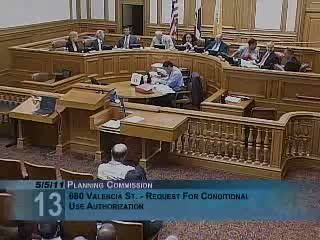
Commission approves two conditional permits for additional cellular antennas at Mercy Terrace amid resident concerns
Summary
The commission approved conditional uses allowing T‑Mobile and Verizon to place new antennas at Mercy Terrace (333 Baker St.) with monitoring and post‑installation testing; residents raised cumulative RF exposure and rooftop access concerns; votes were 6–1 on both items.
The San Francisco Planning Commission approved separate conditional use permits this week to allow T‑Mobile and Verizon to install additional wireless antennas and associated equipment at 333 Baker Street (the Mercy Terrace campus), after hearing technical presentations, independent RF analysis, and focused public comment from residents of the building.
T‑Mobile sought permission to place up to four antennas screened behind architectural shrouds on multiple penthouses; Verizon sought six antennas and basement equipment with a matching screen. Both applicants provided photo simulations and RF coverage maps; third‑party consultant Hammett & Edison presented measurements and modeled cumulative exposures that, the consultant said, would remain well below federal and state limits. Department of Public Health staff reviewed the submissions and noted that some checkboxes in the new DPH form had been checked in error; planning staff clarified those as “yes” and said the carriers had agreed to conditions.
Residents of Mercy Terrace told the commission they were concerned about cumulative exposures and signage on the roof. A Mercy Terrace representative asked whether the Hammett & Edison report considered all approved but unbuilt antennas and cumulative power; Hammett and others confirmed cumulative analysis was included and that modeled and measured levels at occupiable spaces were far below regulatory thresholds. Staff said post‑installation field testing would occur within 10 days of operation and that any resident within 25 feet of an installation could request an in‑unit measurement performed by the carrier.
Commissioner Antonini moved to approve both proposals, noting the coverage benefits and the carriers’ agreement to conditions; Commissioner Moore voted against both, citing precaution and skepticism about intensification of rooftop uses. Each decision passed 6–1. Staff recorded conditions requiring screening, post‑installation RF tests, signage limited to worker access areas, the carriers’ obligation to provide contact information to building residents, and adherence to any further Department of Public Health requirements. The decisions are appealable under the normal administrative process.
Those in favor emphasized improved in‑building and neighborhood coverage, which proponents said was important for safety and emergency response; residents emphasized the right to clear information and access to measurements if they remain concerned.
What happens next: the carriers may proceed to install under the conditions set by the commission. Staff said an actual measurement would be performed within 10 days of operation and that carriers must provide test results to any resident within 25 feet on request.