Get Full Government Meeting Transcripts, Videos, & Alerts Forever!
Get email alerts on the Rincon Hill Ifd topic
No spam. Unsubscribe anytime.
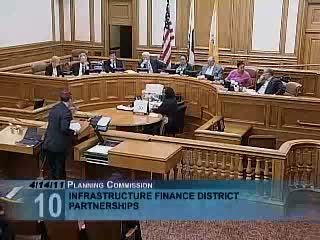
Planning commission approves 45 Lansing modifications, backs Rincon Hill public‑realm financing approach
Summary
The Planning Commission approved modifications to the previously authorized 45 Lansing Street project and endorsed work to coordinate developer in‑kind improvements with a Rincon Hill Infrastructure Financing District to accelerate streetscape and parks work. Commissioners tied affordable‑housing obligations to the approved unit cap and asked staff to manage unit‑merger rules.
The San Francisco Planning Commission approved on April 14 modifications to the long‑planned 45 Lansing Street development in the Rincon Hill area, endorsing a package of developer in‑kind improvements paired with a proposed Rincon Hill infrastructure financing district (IFD) to accelerate public‑realm work.
The project sponsor, represented by Tim Tostin, said the modified scheme would raise the approved unit count to as many as 320 units while increasing off‑street parking to 265 spaces (dropping the parking ratio to about 0.83 spaces per unit), add two car‑share stalls, expand bicycle parking, and reduce on‑site open space from roughly 32,000 to about 27,000 square feet. The sponsor told commissioners the project would pay approximately $3.9 million in Rincon Hill infrastructure impact fees and nearly $5 million into a SOMA stabilization fund; the sponsor proposed satisfying some obligations via in‑kind public‑realm construction on Lansing and adjacent streets.
Michael Yarny of the mayor’s Office of Economic and Workforce Development outlined a possible partnership that would combine sponsor in‑kind work (about $2.5 million cited for 45 Lansing) with an IFD bond purchase (roughly $3.9 million in the sponsor’s example) to yield a larger, more coordinated build‑out of streets, sidewalks and park projects in Rincon Hill. Yarny and planning staff emphasized that the IFD uses only a modest share of new property‑tax increment available to the city (staff cited roughly 57¢ of new net increment in San Francisco’s city‑and‑county context) and that the Rincon Hill infrastructure plan estimates about $32 million in public improvements overall.
Public testimony was extensive. Labor representatives, contractors and several neighborhood groups urged approval to create jobs and finally deliver long‑promised streets and parks. Other speakers, including nearby homeowners, praised the prospect of accelerated improvements but raised concerns about developer performance on past projects and asked for clear assurances on open‑space accounting and how unit combinations might affect family‑sized units.
Commission discussion focused on three enforcement and transparency items: how public‑space credits are counted, how post‑construction unit mergers (for example combining a studio with a two‑bedroom) would be handled, and how the in‑lieu affordable housing payment is calculated. Commissioners adopted a motion that (a) approves the project as modified, (b) pegs the project’s affordable‑housing obligation to the unit count before the commission that day (the 320‑unit cap), and (c) directs staff to work with the sponsor on a condition and reporting mechanism to address front‑end unit‑merger decisions so the commission is informed before certificate of occupancy and to return with implementation language as needed.
The commission’s action was unanimous. The decision keeps the sponsor’s option to provide in‑kind street improvements coordinated with an IFD financing approach; staff noted prioritization of which improvements are built first will be led by planning staff in coordination with the mayor’s office and OEWD. The sponsor said the combined approach could yield nearly $8 million in public infrastructure delivered during project construction rather than years later.
Next steps: staff will finalize the in‑kind valuation and agreement language, work with OEWD to refine the partnership approach for any IFD bond issuance, and report back to the commission as the IFD and in‑kind agreements are developed.