Get Full Government Meeting Transcripts, Videos, & Alerts Forever!
Get email alerts on the Zoning And Public Health topic
No spam. Unsubscribe anytime.
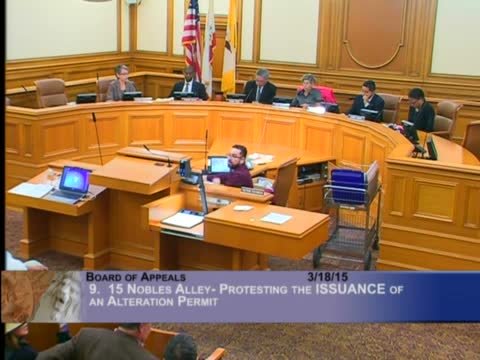
Board of Appeals upholds Planning denial for Green Street spray booth over zoning and health concerns
Summary
The San Francisco Board of Appeals on March 18, 2015, upheld the Planning Department’s denial of a permit to legalize a spray‑painting booth at 1776 Green Street, finding the change would intensify a nonconforming use in a residential district and raising neighborhood health and safety concerns; the vote was 3–1.
The San Francisco Board of Appeals on Wednesday upheld the Planning Department’s decision to deny a permit that would have legalized a spray‑painting booth at 1776 Green Street, concluding the change would amount to an impermissible intensification of a legal nonconforming use in a residential district.
Planning Department senior staff Scott Sanchez told the board the zoning history and code were clear: the property currently operates as a legal nonconforming minor auto‑repair garage, but “legalizing the spray booth … would be intensifying the nonconforming use,” a change the RH‑2 residential zoning does not permit. The board voted 3–1 to uphold Planning’s denial.
Neighbors and public‑health experts told the board that a spray booth in the middle of a dense residential block presents risks. Industrial hygienist Roxanne Finebo, in a written statement read at the hearing, warned that “chemical hazards may include a variety of volatile organic compounds, diisocyanates, polyisocyanates, and heavy metals including lead and carcinogen hexavalent chromium,” and noted the site is adjacent to a park and near an elementary school. Other neighbors described recurring paint odors and sleep disruption.
The property owner and design team said the spray booth has been present for decades and that they planned equipment upgrades — including moving the exhaust farther from the property line and adding filtration — to mitigate odors and emissions. Owner Larry Nacey said he had taken steps to modernize the sprinkler and alarm systems and argued that modern paint products and controls reduce risk.
Board members focused their decision on zoning and the planning record. Commissioners noted historical documents and a 1970s zoning determination that allowed only minor auto repairs; several commissioners said that because the spray booth was never properly authorized, granting a permit now would effectively change the permitted use in a residential zone.
After debate, the board’s motion to uphold Planning’s denial carried. President Anne Lazarus announced the denial was upheld (vote 3–1). The board’s action preserves the Planning Department’s finding that the spray booth cannot be legalized at this location absent a different discretionary process such as a conditional‑use review by the Planning Commission.
Next steps: the decision is final from this hearing stage unless a party pursues other administrative or judicial remedies. Planning staff said the department will continue to coordinate with Fire and DBI on any outstanding fire‑safety or abatement compliance issues noted in the record.